
Natural Stone Walkway Installation Germantown
A natural stone walkway brings the character of real stone to a path — and that means the layout, the footing, and the placement all matter in ways a manufactured paver walkway does not. Natural stone walkway installation in Germantown, MD is about choosing stone, planning a continuous or stepping-stone route, and setting each piece so the path is stable and comfortable to walk. Germantown Hardscape & Pavers helps property owners plan stone paths that fit the garden and the way people move through it.
This page is distinct from a paver walkway, which uses uniform manufactured units, and from a flagstone patio, which is a gathering surface rather than a path. A natural stone walkway is a line of real stone through the landscape, and its success depends on the stone, the layout, and the footing working together.
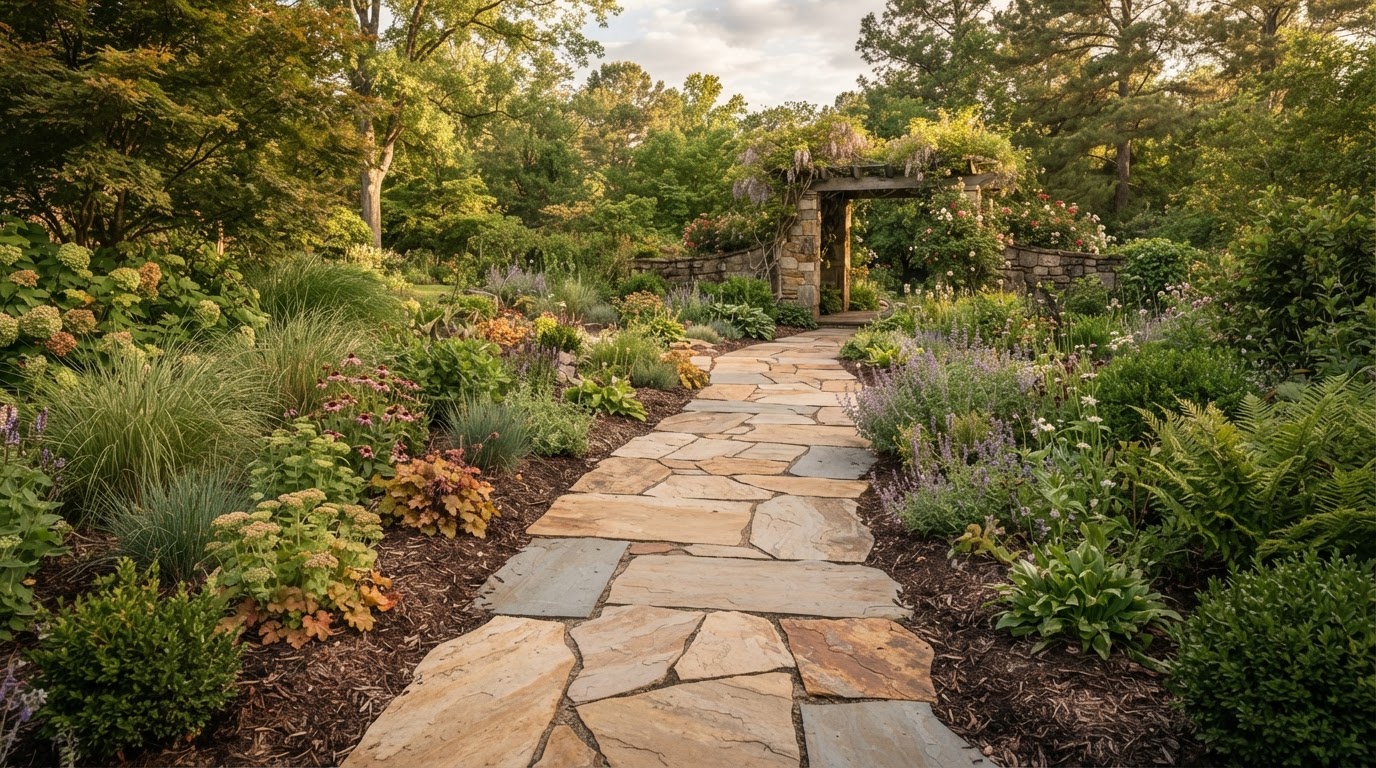
Concept visualization: Natural stone walkway with fitted stepping stones through a garden
Provenance: Concept visualizationScope, Applications, and Homeowner Goals
This service covers new natural stone walkway construction, including front-entry paths, garden routes, and connections between outdoor areas. It includes the choice between a continuous fitted walking surface and a spaced stepping-stone arrangement, stone shape and texture and thickness, comfortable transitions and stable placement, the relationship to lawn and planting beds, and how roots, drainage, grades, and maintenance access shape the path. It is distinct from paver walkways and from flagstone patios.
The decisions that define a natural stone walkway are about movement and material together: whether the path is continuous or stepping stones, what stone is used, how each piece is set for stable footing, and how the path relates to the planting and lawn around it. A primary entry path and a garden path deserve different treatment, and the stone and layout should reflect that.
Surface suitability is considered for the expected users and conditions. A continuous fitted path and a spaced stepping-stone path serve different purposes, and the choice is not merely aesthetic.
Front-entry paths
A welcoming arrival route of natural stone, sized and styled for daily, frequent use by everyone.
Garden routes
Paths through planting beds and garden areas that let you maintain and enjoy the landscape without compacting soil or damaging plants.
Connections between outdoor areas
Stone paths linking the driveway, patio, lawn, and outbuildings so movement between them is clean and intentional.
Continuous versus stepping stones
A continuous fitted walking surface versus a spaced stepping-stone arrangement, chosen for the intended use and footing needs.
Stone shape, texture, and layout
Stone is selected and laid for stable footing, comfortable transitions, and a look that fits the garden and the home.
Relationship to lawn and beds
How the path meets lawn and planting — and how roots, drainage, and maintenance access shape the route — is part of the design.
Materials, Methods, and Design Choices
The defining choice for a natural stone walkway is between a continuous fitted path and a spaced stepping-stone arrangement, because the two serve very different purposes. A continuous path offers a stable, even walking surface suited to regular access; stepping stones offer a more casual, garden character with planted or mulched gaps between. The choice is about the intended use and the footing it provides — not just the look.
Stone selection matters for a walking surface. Shape, texture, thickness, and layout all affect how the path feels underfoot and how stable each piece remains over time.
| Factor | Continuous fitted stone path | Spaced stepping-stone path |
|---|---|---|
| Intended use | Regular, frequent access | Occasional, leisurely garden use |
| Footing and continuity | Continuous, even surface | Gaps between stones |
| Maintenance around joints | Sanded or mortared joints | Planted or mulched gaps to tend |
| Visual character | Defined, intentional route | Casual, scattered garden feel |
| Suitability for regular access | Well suited | Less suited to daily, all-user access |
Stone selection
Stone is chosen for shape, texture, and thickness — and for how it will read and perform as a walking surface. The selection sets both the look and the footing of the path.
Stable placement
Each stone is set so it stays stable underfoot, with comfortable transitions between pieces and a base that resists movement over time.
Relationship to the landscape
How the path meets lawn, beds, roots, and drainage is part of the design, so the stone path fits the garden rather than cutting through it.
Site Assessment and Project Planning
A natural stone walkway assessment looks at the route, the footing, and the landscape together. Roots and nearby planting, drainage and grades, transitions, the relationship to lawn and beds, and the surface suitability for the expected users all influence the layout and stone choice. These are evaluated at the property because a stone path that looks right but shifts or pools water is a problem.
Stepping stones are not universally suitable for all users, mobility needs, or weather conditions. Where regular, all-user access matters, a continuous fitted path is usually the better choice, and that is part of the assessment.
Route and destination
Where should the path go, and does the route follow real movement and connect cleanly to its destinations?
Continuous versus stepping stones
Does the intended use call for a continuous fitted path for regular access, or a spaced stepping-stone arrangement for a garden character?
Stone and footing
What stone suits the look and the footing, and how will each piece be set for stable, comfortable walking?
Roots and nearby planting
Are there tree roots or beds the path must avoid or work around, and how will the base hold up against root growth?
Drainage and grades
How does water cross the route, and how will slope and setting keep the path clear rather than channeling runoff along it?
Surface suitability
Is the chosen layout — continuous or stepping stones — suitable for the expected users and conditions, including mobility and weather?
Germantown Context and Related Services
Natural stone walkways in Germantown and across Montgomery County, MD suit the region's wooded, mature landscapes, but roots, drainage, and grade still shape the route. A path planned for the specific site — its soil, slope, and the planting along it — stays stable and usable through the seasons. Conditions vary by property, so the route and stone are site-specific.
A natural stone walkway often connects to other stone features. Related completed pages describe the coordinated hardscape plan it may be part of, the paver walkway alternative, and the flagstone patio it can lead to.
Related Completed Services
Natural Stone Walkway Installation Questions
A natural stone walkway brings real stone to a path, so the layout, footing, and placement all deserve care. Call to talk through the stone and route for your path, or request an estimate to begin.
When is a continuous stone path preferable to stepping stones?↓
A continuous fitted path is preferable for regular, frequent access by everyone, because it offers a stable, even walking surface. Stepping stones suit occasional, leisurely garden use where a casual character is wanted. The choice is about the intended use and the footing it provides, not just the look.
How does a natural stone walkway differ from a paver walkway?↓
A natural stone walkway uses real stone that varies in shape, texture, and size, giving an organic look and a one-of-a-kind path. A paver walkway uses uniform manufactured units with consistent sizes and tight joints, giving a crisp, repeatable line. Stone tends to read as more natural; pavers tend to read as more formal.
Can a stone path be planned around existing planting?↓
Yes. A natural stone path can be routed around existing trees, shrubs, and beds so it fits the garden rather than forcing removal. Roots are considered in the base and setting, and the relationship to lawn and beds is part of the design so the path and the planting coexist.
What affects stone selection for a walking surface?↓
Shape, texture, thickness, and layout all affect how the stone feels underfoot and how stable each piece stays over time. A flatter, more even stone suits a dining or entry route; a more textured, natural stone suits a garden path. The selection sets both the look and the footing.
How are uneven grades or transitions evaluated?↓
Grade changes are handled through the path's slope, steps, or a slight reroute so the surface stays comfortable to walk. A path that drops suddenly at a transition becomes a trip hazard, so the elevation is planned along the whole route, and each stone is set for a stable, even footing.
Can a natural stone path connect to a flagstone patio?↓
Yes. A natural stone walkway can connect to a flagstone patio so the two read as one design, and the transition in stone, joint style, and elevation is planned so it is clean. Matching or complementing the stone keeps the connection intentional rather than abrupt.
Discuss Your Project
Call our team based in Germantown, MD to talk through scope, site considerations, and next steps — or request an estimate and we will follow up.