
Decorative Landscape Rock Installation Germantown
Decorative landscape rock installation is about using stone as a landscape surface or accent in a way that suits the site, the plants, and the maintenance the homeowner is willing to take on. Stone offers a different set of properties than organic mulch — it lasts longer, holds heat differently, and requires its own approach to containment and weed management. Germantown Hardscape & Pavers helps property owners in Germantown, MD select and install decorative rock where it genuinely fits the landscape's conditions and goals.
The main decision is whether decorative stone is the right surface for the specific bed — based on appearance, the plants it will surround, how it handles debris and heat, and what maintenance it will require. Decorative rock is not the best choice for every planting bed, and its tradeoffs should be understood before it is installed.
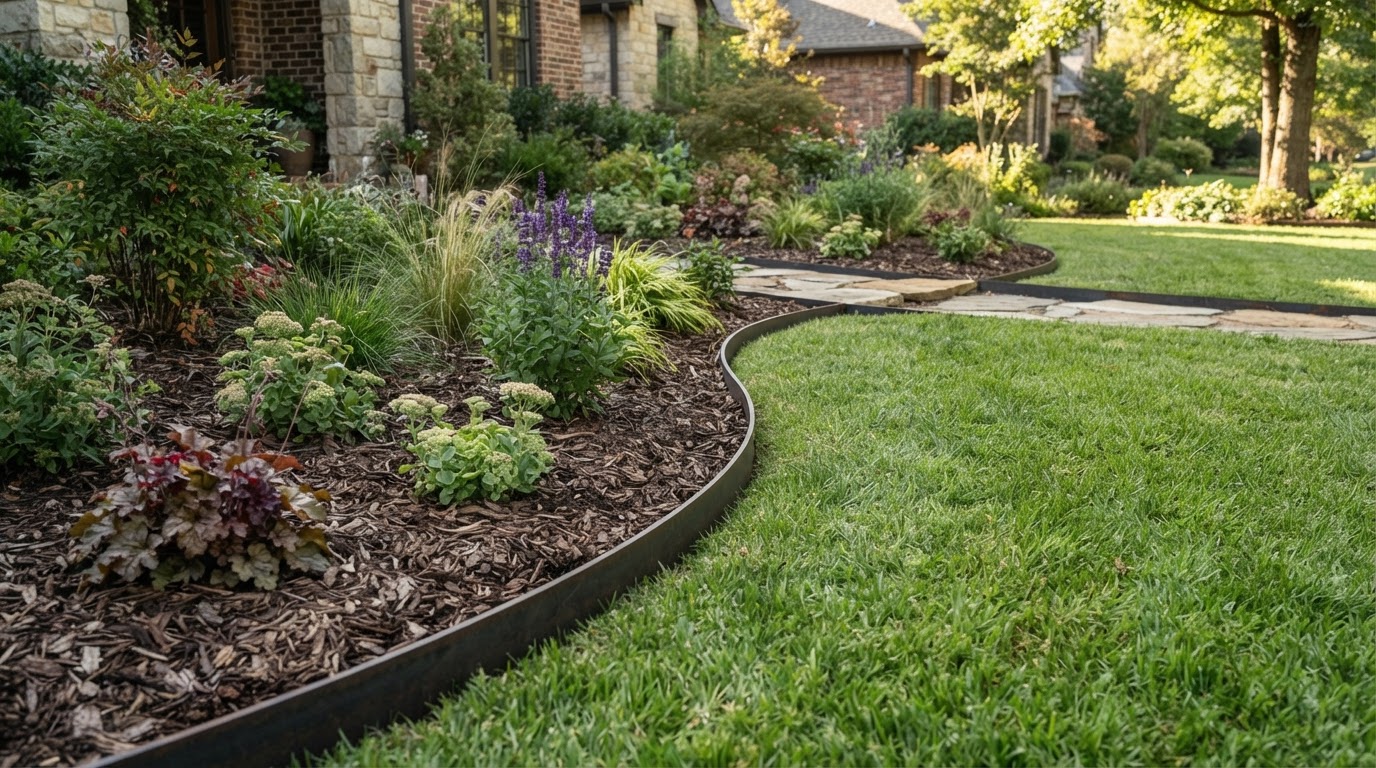
Concept visualization: Decorative rock bed with containment and plant compatibility
Provenance: Concept visualizationScope, Applications, and Homeowner Goals
This service selects and installs decorative stone as a landscape surface or accent. It includes evaluating the intended appearance and use, stone size, shape, color, and texture, relationships to planting and nearby paving, containment to hold the stone in place, existing surface preparation, and the maintenance the rock bed will need over time. The installation accounts for leaf litter and debris management, heat exposure, weed control, and how the stone surface will interact with the plants and hardscape around it.
This page is distinct from structural drainage aggregate, which is a functional component of drainage systems, and from engineered erosion protection, which addresses slope stabilization. Decorative rock is a surface material chosen for appearance and low-maintenance ground cover — it is not a drainage system or an erosion-control installation. The distinction matters because stone that looks similar to drainage aggregate does not function the same way.
The scope does not assume decorative stone is the best surface for every bed. Rock and mulch serve different purposes, suit different plants, and have different maintenance needs. The service evaluates whether stone genuinely fits the bed's conditions rather than installing it wherever it looks appealing.
Appearance and use
The visual role the stone surface should play — a clean bed border, a decorative accent around planting, or a low-maintenance ground cover — and how that goal shapes the stone selection and layout.
Stone size, color, and texture
The stone's size, shape, color, and texture, chosen for the bed's scale and the plants it surrounds. Larger stones suit bigger beds; smaller gravel suits tighter spaces, Each has different maintenance and debris considerations.
Containment and edges
How the stone is held within the bed — edging that prevents migration into the lawn or paths, and transitions that keep the stone surface separated from surrounding surfaces.
Maintenance and debris
How the stone bed will be maintained — leaf removal, weed management, and debris handling — and whether the homeowner is prepared for the ongoing care a rock surface requires.
Materials, Methods, and Design Choices
The key comparison is between decorative landscape rock and organic mulch. Rock lasts longer than mulch and does not need annual replacement, which reduces material cost over time. But rock does not feed the soil as it breaks down, can retain heat that stresses some plants, and makes it harder to remove leaves and debris that accumulate within it. Mulch breaks down and improves soil but needs replenishment, and it is easier to work with when the bed is later redesigned. Neither material is universally better — each suits different plants, sites, and maintenance preferences.
The choice depends on what the bed needs to accomplish. A bed with heat-loving plants may benefit from rock's warmth; a bed with moisture-loving plants may suffer in it. A bed that will not be redesigned for years suits rock's longevity; a bed that may change suits mulch's flexibility. The comparison below lays out these tradeoffs so the homeowner can choose based on the actual conditions.
| Consideration | Decorative rock | Organic mulch |
|---|---|---|
| Appearance | Clean, permanent stone surface | Natural, organic look |
| Material renewal | Long-lasting, less replacement | Breaks down, needs replenishing |
| Debris management | Harder to clean leaves from stone | Easier to rake or refresh |
| Soil contribution | Does not feed soil | Adds organic matter as it breaks down |
| Heat exposure | Retains heat, can stress some plants | Insulates soil, stays cooler |
| Future changes | Harder to redesign the bed | Easier to modify layout |
River rock and gravel
Smooth or crushed stone in various sizes, suited to beds where a permanent, low-replacement surface is desired. Size is chosen for the bed's scale, and containment is needed to prevent migration into adjacent surfaces.
Larger stone and boulders
Boulder accents or larger stone that create structure and visual weight in the landscape, suited to larger beds or beds where stone is a primary design element rather than a uniform surface.
Containment and preparation
Edging, separation fabrics where appropriate, and surface preparation that keeps the stone where it belongs and reduces weed growth. These are part of the installation, not optional add-ons.
Site Assessment and Project Planning
A decorative rock assessment evaluates whether stone is the right surface for the specific bed and what preparation it needs. Existing surface condition matters — placing stone over accumulated material or a poorly prepared surface leads to weed problems and uneven settling. Leaf litter and debris are a consideration because they accumulate within rock and are harder to remove than from mulch. Heat exposure matters because stone retains warmth, which can stress plants that prefer cooler root zones. Weed management is evaluated because stone is not weed-free; without proper preparation and ongoing maintenance, weeds emerge through and around the stone.
Separation fabrics or membranes may be appropriate in some applications to reduce weed growth, but their suitability depends on the specific bed. Stone does not improve drainage on its own — a bed with poor drainage will still hold water under the stone, potentially harming the plants it was meant to showcase. The assessment checks whether the site's drainage supports the rock surface or whether drainage needs to be addressed first.
Plant compatibility
Whether the plants in the bed tolerate the heat and moisture conditions that stone creates around their roots. Some plants thrive in stone; others stress. The assessment matches the stone choice to the plants it will surround.
Existing surface and drainage
The condition of the existing surface and whether the site drains well. Stone does not fix poor drainage; a saturated bed under stone will still be saturated. Drainage is evaluated before stone is installed.
Containment and edges
How the stone will be held within the bed — edging type, transition to adjacent surfaces, and whether existing edging is adequate or needs to be installed or replaced.
Debris and weed management
How leaves and debris will be managed within the stone, and what weed control the bed will need. Stone is not maintenance-free; it requires different maintenance than mulch, and the homeowner should understand what that involves.
Future flexibility
Whether the bed is likely to be redesigned in the future, which affects the material choice. Stone is harder to remove and replace than mulch, so a bed that may change suits mulch better than a stable, long-term bed.
Heat and microclimate
How the stone's heat retention affects the plants and the surrounding area. Stone can create a warmer microclimate that suits some plants and stresses others, and this is considered in the material selection.
Germantown Context and Related Services
Landscape beds in Germantown and across Montgomery County, MD face site-specific conditions — sun exposure, soil type, existing tree canopy, and the particular plants in the bed — that determine whether decorative stone is appropriate. The installation is evaluated for the specific bed rather than treating stone as a universal low-maintenance solution. A full-sun bed with drought-tolerant plants may suit stone; a shaded bed with moisture-loving plants may not.
Decorative rock installation connects to related completed services — garden bed design for the bed layout, mulch installation as an alternative surface, and landscape edging for the bed's boundaries. Each may be part of the bed's overall plan.
Related Completed Services
Decorative Landscape Rock Installation Questions
Decorative stone is a real choice with real tradeoffs. Call to discuss whether stone suits your beds' conditions and plants, or request an estimate to begin a rock installation planned for the specific site rather than chosen for appearance alone.
Where can decorative landscape rock be useful?↓
Decorative rock is useful in beds where a permanent, low-replacement surface is desired, and where the plants tolerate the heat and moisture conditions stone creates. It suits full-sun beds, drought-tolerant plantings, and areas where organic mulch washes away or breaks down too quickly. It is less suited to beds with moisture-loving plants or beds that are likely to be redesigned. The right use depends on the bed's conditions, not just on appearance.
How does rock compare with mulch around planting?↓
Rock lasts longer and needs less frequent replacement, but it does not feed the soil as it breaks down, retains heat that can stress some plants, and makes leaf and debris removal harder. Mulch breaks down and improves soil but needs replenishing. Neither is universally better — each suits different plants, sites, and maintenance preferences. The choice should reflect what the bed actually needs, not just what looks good initially.
Will a rock bed still need maintenance?↓
Yes. Stone does not eliminate weeds — seeds germinate in the gaps between stones, and weeds emerge through and around the rock over time. Leaves and debris that accumulate within stone are harder to remove than from mulch. A rock bed is not maintenance-free; it requires different maintenance than mulch, and the homeowner should understand what that involves before choosing stone.
What should be considered before choosing stone size or color?↓
The bed's scale, the plants it surrounds, and the surrounding landscape's palette. Larger stones suit bigger beds and create more visual weight; smaller gravel suits tighter spaces but may be harder to keep clean. Color should complement the house, the plants, and other hardscape. The size and color are chosen for the specific bed, not for appearance alone.
Does decorative rock improve drainage automatically?↓
No. Stone does not fix poor drainage. A bed that holds water will still hold water under stone, and the saturated conditions can harm the plants the stone was meant to showcase. If the site has drainage problems, those should be addressed before or alongside the rock installation — the stone itself does not provide drainage correction.
Can an existing mulched bed be converted to rock?↓
Yes, but the conversion requires proper preparation — removing or incorporating the existing mulch, evaluating the soil and drainage, installing containment, and selecting stone suited to the plants. Simply spreading stone over existing mulch without preparation leads to uneven settling and weed problems. The conversion is a project in itself, not a simple material swap.
Discuss Your Project
Call our team based in Germantown, MD to talk through scope, site considerations, and next steps — or request an estimate and we will follow up.