
Mulch Installation Germantown
Mulch installation is about applying the right surface material to landscape beds in a way that supports plant health, manages weeds, and holds moisture — not simply covering the ground for appearance. The condition of the existing bed matters before adding new material, and the right mulch depends on the plants, the site, and how the bed drains. Germantown Hardscape & Pavers helps property owners in Germantown, MD select and install mulch that suits their landscape beds' conditions and the plants growing in them.
The main decision is whether the bed needs a refresh of existing mulch, a full renovation with new material, or preparation and mulching of a newly installed bed — and which mulch material fits the plants and site. Not every bed needs the same treatment, and not every mulch suits every plant.
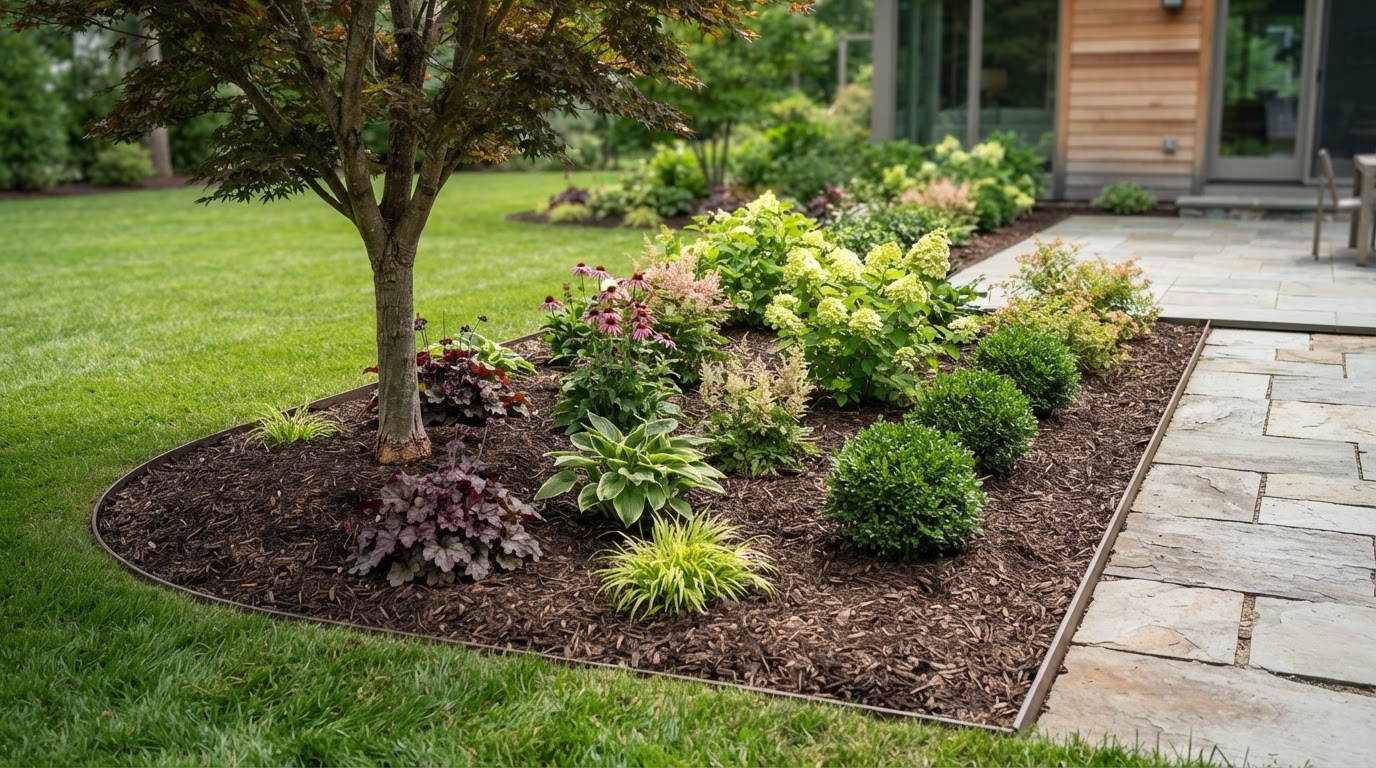
Concept visualization: Mulched planting bed with proper trunk separation and clean edges
Provenance: Concept visualizationScope, Applications, and Homeowner Goals
This service selects and installs appropriate mulch in landscape beds. It includes assessing the existing mulch condition and accumulated depth, evaluating the bed's drainage and plant health, preparing the bed surface, selecting a mulch material suited to the plants and site, and applying it at an appropriate depth with proper separation from plant crowns, trunks, and nearby hardscape. The installation accounts for the bed's boundaries, access for delivery, and follow-up maintenance needs.
This page is distinct from garden bed design, which addresses the bed's layout and plant selection. Mulch installation is the surface treatment — the material that covers the prepared bed. It is also distinct from decorative landscape rock, which is a different surface material with different properties and maintenance requirements.
The scope does not treat mulch as a universal landscape solution. Mulch does not correct drainage problems, permanently eliminate weeds, or suit every plant equally. The service evaluates what the bed actually needs — whether the existing mulch should be refreshed or removed, whether the plants are healthy enough for a top dressing, and whether the selected material is appropriate for the specific application.
Existing material assessment
Whether the existing mulch should be refreshed, partially removed, or fully replaced, based on its accumulated depth, condition, and whether it has become matted or compacted.
Material selection
Which mulch material — hardwood, shredded bark, compost, or another option — suits the bed's plants, drainage, and the homeowner's maintenance preferences, rather than applying the same product to every bed.
Bed preparation
Cleaning and edging the bed before installation, addressing accumulated material if needed, and ensuring the surface drains properly before new mulch is applied.
Application and plant protection
Applying mulch at an appropriate depth with proper separation from tree trunks, shrub crowns, and the house siding, so the mulch supports plant health rather than causing problems.
Materials, Methods, and Design Choices
The key distinction is between refreshing an established mulched bed and preparing and mulching a newly installed bed. Refreshing an established bed involves evaluating the existing mulch — its depth, condition, and whether it has built up too much over repeated top dressings. If mulch has accumulated beyond a healthy depth, adding more without removing some can smother plant roots and create a thatch layer that repels water. Preparing a new bed involves soil work, edging, and installing mulch at the correct initial depth for the plants and the bed's drainage.
Mulch material selection depends on the plants and site. Some materials break down faster and feed the soil; others last longer but contribute less organic matter. Dyed products offer a specific color but may not suit every plant or site. The selection is based on what the bed needs, not on applying the same mulch to every bed regardless of conditions.
| Consideration | Refresh established bed | New bed installation |
|---|---|---|
| Existing material | Evaluate depth and condition | None — fresh start |
| Preparation | Remove excess if over-accumulated | Soil prep, edging, then mulch |
| Depth | Top up to appropriate total | Full initial application |
| Plant protection | Clear trunks and crowns | Set separation from new plants |
| Follow-up | Lighter refresh cycle | Establishment watering |
Hardwood and bark mulches
Organic mulches that break down over time, feeding the soil while suppressing weeds and conserving moisture. The breakdown rate and appearance vary by product, and the selection depends on the plants and the homeowner's maintenance preferences.
Compost-based mulches
Materials that contribute organic matter more quickly, suited to beds where soil improvement is a goal alongside surface coverage, but with different appearance and longevity than bark mulches.
Bed preparation and edging
Part of the installation rather than an afterthought — clearing excess accumulation, defining edges to hold mulch, and ensuring the surface drains before mulch is applied.
Site Assessment and Project Planning
A mulch installation assessment evaluates the existing bed before any material is added. If the bed already has mulch, the accumulated depth is checked — mulch that has been repeatedly topped up without removing old material may exceed a healthy depth, smothering roots and repelling water. The bed's drainage is evaluated because mulch on a poorly draining surface stays saturated and can promote root rot. Plant health is assessed because mulch applied around stressed or diseased plants may worsen the problem if the underlying issue is not addressed first.
Application depth and placement are project-dependent, not universal. The appropriate depth depends on the mulch material, the existing accumulation, the plants in the bed, and the site's drainage. Mulch should be kept clear of tree trunks and shrub crowns to avoid rot and disease, and away from the house siding to prevent moisture contact with the building. The assessment covers these factors so the mulch supports the landscape rather than creating new problems.
Existing mulch depth
How much mulch is already on the bed and whether it has accumulated beyond a healthy level. Continually adding mulch without checking depth is a common cause of plant stress, and excess mulch may need removal before fresh material is applied.
Drainage and moisture
Whether the bed drains well or stays saturated, and how the mulch will interact with the site's moisture. Mulch on a poorly draining surface holds excess water; the drainage should be evaluated before mulching.
Plant health and crowns
The condition of the plants in the bed, and ensuring mulch is kept clear of trunks and shrub crowns so it does not promote rot, disease, or pest problems around the plant bases.
Material selection
Which mulch material suits the bed's plants, the site's conditions, and the homeowner's color and maintenance preferences — rather than applying the same product regardless of what the bed actually needs.
Building proximity
How close the bed is to the house siding or other structures, and ensuring mulch does not contact the building in a way that traps moisture against the structure.
Boundaries and access
Whether the bed's edging holds mulch in place and prevents it from washing into the lawn, and whether the site allows access for delivery and installation without damaging the surrounding landscape.
Germantown Context and Related Services
Landscape beds in Germantown and across Montgomery County, MD face site-specific conditions — soil type, drainage, existing tree canopy, and the particular plants in the bed — that determine which mulch and what depth are appropriate. The installation is evaluated for the specific bed rather than applying a universal depth or material. A bed beneath mature trees has different mulch needs than a full-sun foundation bed, and the service reflects that difference.
Mulch installation connects to related completed services — garden bed design for the bed layout, tree and shrub planting for the plants within the bed, and decorative landscape rock as an alternative surface material. Each may be part of the bed's overall plan.
Related Completed Services
Mulch Installation Questions
The right mulch starts with understanding the bed it is going into. Call to discuss your beds' conditions and what they need, or request an estimate to begin a mulch installation that suits your plants and site rather than a one-size-fits-all approach.
Should old mulch always be removed before new mulch is installed?↓
Not always — it depends on how much mulch has accumulated. If the existing mulch is at or near a healthy depth, adding a thin refresh layer is appropriate. If mulch has built up too deep over repeated top dressings, some should be removed before new material is added to avoid smothering roots and creating a thatch layer that repels water. The existing depth is checked before deciding whether to refresh or remove.
How is the appropriate mulch material selected?↓
By matching the material to the bed's plants, drainage, and the homeowner's maintenance preferences. Different mulches break down at different rates, contribute different amounts of organic matter, and suit different plant types. The selection is based on what the specific bed needs rather than applying the same product everywhere. Color, texture, and longevity are part of the discussion, but plant and site suitability come first.
Can too much accumulated mulch create problems?↓
Yes. Mulch that is repeatedly added without removing old material can exceed a healthy depth, smothering plant roots, creating a compacted layer that repels water rather than absorbing it, and promoting disease around trunks and crowns. Checking existing depth before adding more is part of the installation, not an optional step. Over-mulching is a common cause of plant stress that fresh mulch alone does not fix.
Does mulch eliminate the need for weeding?↓
No. Mulch suppresses weeds by blocking light and creating a barrier, but it does not permanently prevent all weed growth. Weeds can emerge through or on top of mulch, and seeds can germinate in the mulch layer itself. Mulch reduces weed pressure but does not eliminate it — ongoing maintenance is still needed. A bed that is mulched but not maintained will still develop weeds.
What should be checked around trees, shrubs, and the house?↓
Mulch should be kept clear of tree trunks and shrub crowns to prevent rot and disease at the plant base, and away from the house siding to avoid trapping moisture against the building. These clearances are part of proper installation — piling mulch against trunks or walls creates problems that the mulch was meant to prevent. The assessment checks proximity to plants and structures before application.
Can mulching be coordinated with bed redesign or new planting?↓
Yes, and it often should be. Mulching a newly designed or replanted bed is part of the overall installation, not a separate step. If the bed is being redesigned, the layout, edging, planting, and mulching are planned together so the surface material fits the bed's shape and the plants within it. Coordinating these elements produces a better result than mulching an existing bed without addressing its layout.
Discuss Your Project
Call our team based in Germantown, MD to talk through scope, site considerations, and next steps — or request an estimate and we will follow up.