
Landscape Edging Installation Germantown
Landscape edging installation is about creating clean, defined boundaries between landscape surfaces — between lawn and planting beds, mulch and stone, or paths and planted areas. Good edging holds mulch or stone in place, keeps grass from creeping into beds, and creates a visual line that organizes the landscape. Germantown Hardscape & Pavers helps property owners in Germantown, MD select and install edging that defines their landscape's boundaries cleanly and serves the practical needs of mowing, trimming, and maintenance.
The main decision is the edging material and profile — a subtle low-profile border that nearly disappears, or a more visible masonry or stone border that becomes a design element — and how it serves the landscape's layout and the surfaces it separates. Landscape edging and structural paver restraint serve different functions and should not be confused.
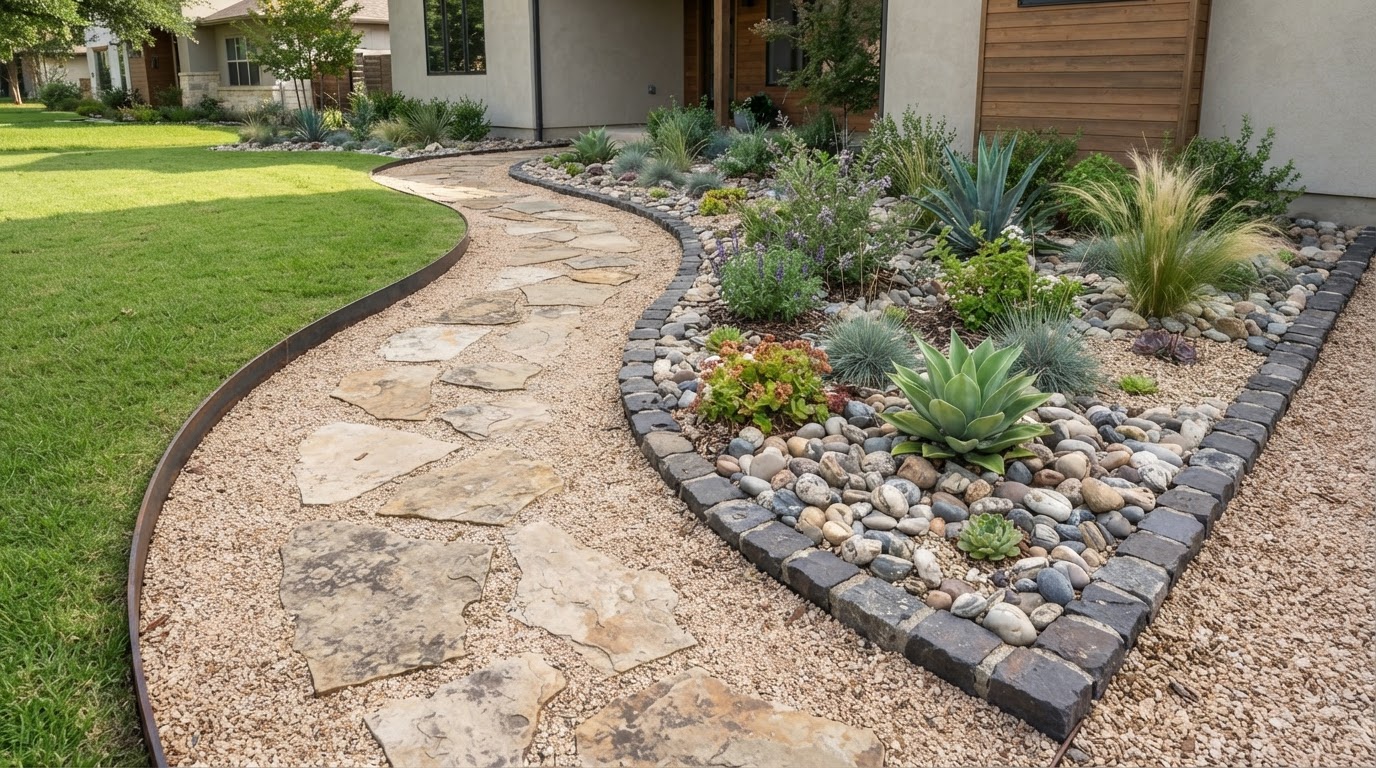
Concept visualization: Landscape edging defining a clean bed-to-lawn boundary
Provenance: Concept visualizationScope, Applications, and Homeowner Goals
This service designs and installs landscape edging to define boundaries between landscape surfaces. It includes evaluating the surfaces being separated, the layout — straight runs or curved bed lines — and the edging material, from subtle metal or plastic borders to more visible masonry or stone edging. The installation accounts for mowing and trimming access, surface transitions, root and drainage considerations, existing edging condition, and how the edging will perform over time.
This page is distinct from paver edge restraint repair, which addresses the structural edge support that holds pavers in place beneath the surface. Landscape edging is a visible, decorative boundary between landscape surfaces — it is not structural paver restraint, and it does not substitute for a retaining wall where a grade change requires structural support.
The scope does not assume one edging material is right for every bed. A low-profile metal border suits a clean, understated line; a masonry or stone border suits a more visible design statement. The selection is based on the landscape's style, the surfaces involved, and the maintenance it will require — not on applying the same edging everywhere.
Surface separation
What the edging separates — lawn from bed, mulch from stone, path from planting — and how the transition between those surfaces should be defined and contained.
Layout and curves
Whether the edging follows straight lines or curved bed shapes, and how the material handles curves without breaking or leaving gaps that allow material migration.
Material and profile
The edging material — metal, masonry, stone, or manufactured landscape edging — and its visible profile, chosen for the landscape's style and the separation it needs to provide.
Mowing and maintenance access
How the edging interacts with mowing and trimming — whether a mower wheel can run along it, whether it creates a clean edge for trimming, and whether it obstructs foot traffic or equipment.
Materials, Methods, and Design Choices
The main comparison is between a subtle low-profile border and a more visible masonry or stone border. A low-profile metal or manufactured edging nearly disappears into the landscape, providing a clean separation without drawing visual attention. It suits landscapes where the planting and lawn are the focus and the edging should be felt rather than seen. A masonry or stone border is a visible design element — it adds architectural structure to the landscape and can complement the style of nearby patios, walls, or the house itself.
Each approach has tradeoffs. Low-profile edging is less visually prominent and less expensive but may be less durable where it receives impact from mowers or foot traffic. Masonry and stone borders are more visible and more durable but cost more and require more substantial installation. The choice depends on the landscape's design, the surfaces involved, and the homeowner's budget and maintenance preferences.
| Consideration | Low-profile border | Masonry or stone border |
|---|---|---|
| Visual emphasis | Subtle, nearly invisible | Visible design element |
| Curves and layout | Flexible for curved beds | Rigid, suits straight or gentle curves |
| Material containment | Holds mulch and stone edges | Heavier containment for deeper beds |
| Mowing access | Mower wheel can run along edge | Wider profile needs trimming space |
| Installation | Lighter, faster install | More substantial construction |
Metal and manufactured edging
Low-profile borders in steel, aluminum, or manufactured landscape edging that provide clean separation without visual prominence, suited to landscapes where the edging should be subtle and the planting is the focus.
Masonry and stone borders
Visible borders in brick, stone, or concrete that become design elements in the landscape, suited to properties where the edging complements nearby hardscape or architecture and adds structural character.
Paver and concrete curbing
Borders that coordinate with adjacent paver surfaces or that provide heavier containment for deeper beds or areas with more traffic, chosen for durability and visual integration with existing hardscape.
Site Assessment and Project Planning
An edging assessment evaluates the surfaces the edging separates and the conditions it will face. The layout — straight or curved — affects which materials can follow the bed lines cleanly. Mowing and trimming access matters because edging that obstructs a mower or creates a trip hazard defeats its purpose. Root locations, drainage paths, and the existing edging condition are checked because edging that conflicts with roots or water flow will fail or create new problems. Where people walk or equipment operates, abrupt edges or projections should be avoided for safety.
The assessment also considers whether a grade change requires more than a decorative border. Landscape edging defines surfaces but does not retain soil — a slope or elevation change that needs structural support requires a retaining wall, not edging. Understanding the difference prevents installing edging where a wall is needed, which leads to failure and soil movement.
Surface types
What surfaces the edging separates — lawn to bed, mulch to stone, path to planting — and what containment each surface requires to stay in place and look clean over time.
Layout and curves
Whether the bed lines are straight or curved, and which edging materials can follow those lines without gaps, breaks, or visible joints that compromise the appearance or function.
Mowing and trimming
How the edging interacts with mowing equipment and trimming tools — whether a mower wheel can run along it cleanly, and whether the edging creates a trimming edge or an obstruction.
Roots and drainage
Whether existing tree roots or drainage paths affect where edging can be installed, and whether the edging would block or redirect water flow in an unintended way.
Grade changes
Whether the bed has a grade change that requires a retaining wall rather than decorative edging. Edging defines surfaces; it does not retain soil. A slope that needs structural support needs a wall, not edging.
Safety and traffic
Whether the edging creates trip hazards or obstructs walking routes, and whether the material and profile are appropriate for areas where people walk or equipment operates.
Germantown Context and Related Services
Landscapes in Germantown and across Montgomery County, MD vary in style, layout, and the surfaces they combine — from formal front yards with straight bed lines to casual backyards with curved borders. The edging selection reflects the specific landscape's design and the surfaces it separates rather than applying the same material everywhere. A landscape with existing stone walls or pavers may benefit from matching masonry edging; a clean modern yard may suit low-profile metal.
Landscape edging connects to related completed services — garden bed design for the bed layout it borders, mulch and decorative rock installation for the surfaces it contains, and landscape and garden wall installation where a boundary needs more than edging. Each may be part of the landscape's overall plan.
Landscape Edging Installation Questions
Clean edges start with the right boundary for the surfaces they define. Call to discuss your landscape's layout and what edging it needs, or request an estimate to begin an edging installation that fits your beds, your mowing routine, and your landscape's style.
What does landscape edging help separate or contain?↓
Landscape edging defines the boundary between surfaces — lawn and planting beds, mulch and gravel, paths and planted areas. It holds mulch or stone within the bed, keeps grass from creeping into planting, and creates a clean visual line that organizes the landscape. Without edging, mulch migrates into the lawn and grass invades the bed, creating a messy, high-maintenance boundary.
How does decorative edging differ from paver edge restraint?↓
Landscape edging is a visible, decorative boundary between landscape surfaces — what you see between lawn and bed. Paver edge restraint is a structural component beneath the surface that holds pavers in place. They serve different functions: edging defines surfaces, while restraint supports the paving structurally. Edging does not substitute for restraint, and restraint is not visible as a landscape border.
Can edging follow a curved garden bed?↓
Yes, but the material matters. Flexible edging — metal or manufactured landscape edging — can follow curves smoothly without joints or gaps. Rigid masonry or stone edging can follow gentle curves but is less suited to tight radiuses. The bed's layout determines which materials will work cleanly, and the selection accounts for the curves the design requires.
What should be considered for mowing and trimming?↓
Whether a mower wheel can run along the edging without scalping the lawn or damaging the border, and whether the edging provides a clean line for trimming. A low-profile border that a mower can ride along reduces trimming work; a tall masonry border may require trimming the grass beside it by hand. The edging's height and profile affect how much maintenance it creates.
Can edging be added to an existing bed?↓
Yes, if the bed's layout and the existing conditions support it. Adding edging to an established bed may require redefining the edge, removing accumulated material, and ensuring the edging fits the existing curves and surface levels. Existing roots or drainage paths are checked so the edging does not conflict with them. Adding edging to an existing bed is a renovation, not just a border installation.
When does a grade change require more than a landscape border?↓
When the bed has a slope or elevation change that needs to hold back soil, a retaining wall — not decorative edging — is required. Edging defines surfaces but does not retain soil; installing edging where a wall is needed leads to failure, soil movement, and erosion. The assessment distinguishes between a surface boundary and a structural grade change so the right solution is used for the right need.
Discuss Your Project
Call our team based in Germantown, MD to talk through scope, site considerations, and next steps — or request an estimate and we will follow up.