
Retaining Wall Repair Germantown
Retaining wall repair starts with understanding why the wall moved, not just covering the symptom. Retaining wall repair in Germantown, MD begins with evaluating the existing wall — leaning, bulging, cracking, displaced units, or settlement — and the underlying causes that produced those signs. Germantown Hardscape & Pavers helps property owners assess wall conditions and determine whether repair, partial reconstruction, or replacement is the right response.
The main decision is whether the visible problem is isolated or indicates something deeper. A wall that has moved once may continue to move if the cause — drainage, base, or load — is not addressed. Repair is not appropriate for every distressed wall, and understanding the difference is what makes the evaluation useful.
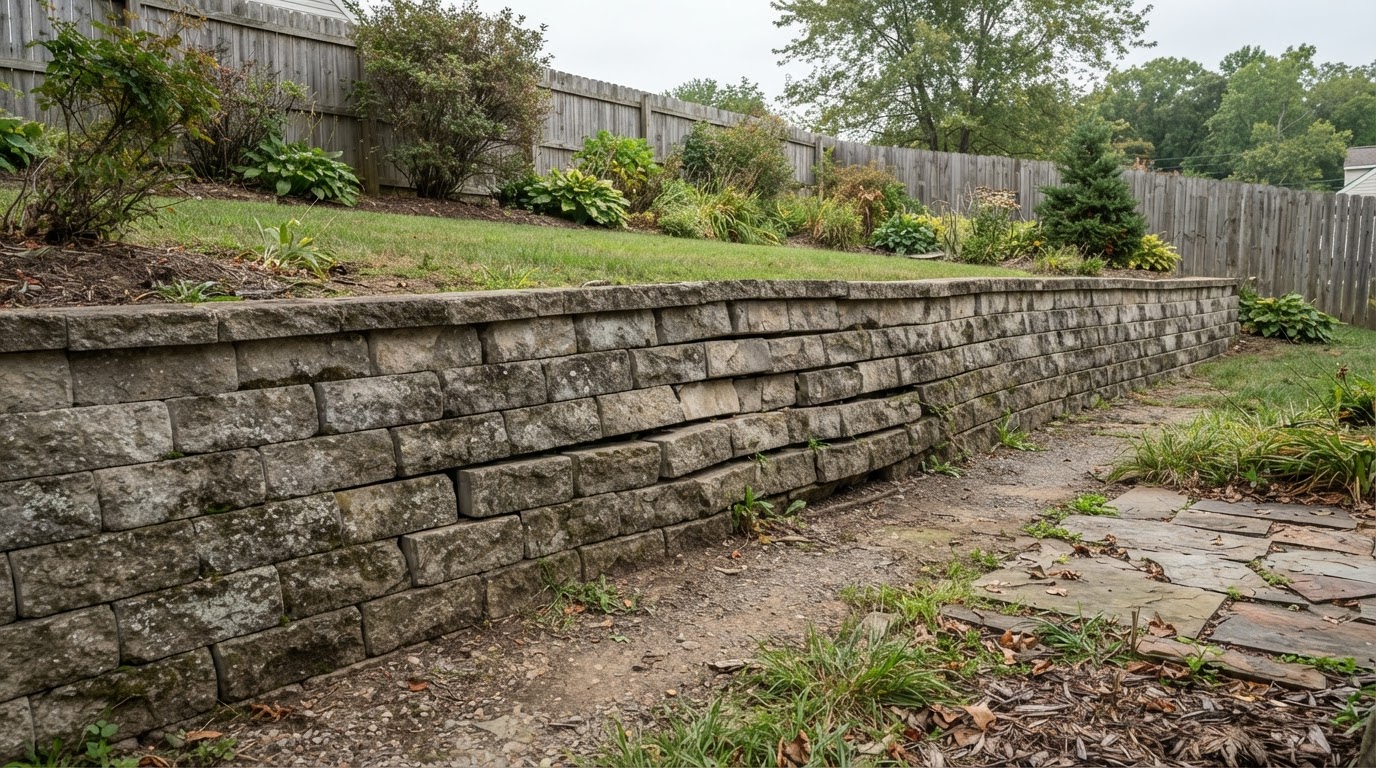
Concept visualization: Existing retaining wall showing signs of movement for assessment
Provenance: Concept visualizationScope, Applications, and Homeowner Goals
This service covers the evaluation of existing retaining walls and the repair, partial reconstruction, or replacement of wall problems. It includes assessing visible conditions — leaning, bulging, cracking, displaced units, settlement — identifying likely contributing factors such as drainage changes, base conditions, or nearby loads, distinguishing localized surface issues from broader movement, and determining whether the wall's material and construction support repair or whether replacement is the better response.
This page is distinct from retaining wall installation, which builds new walls, and from retaining wall drainage repair, a future specialty page that addresses wall-related water management specifically. Here the focus is the broader evaluation of an existing wall's condition and the repair options it supports.
Repair is not always the answer. A wall whose movement stems from an unresolved drainage problem, an inadequate base, or a load it was not designed for may need reconstruction rather than cosmetic treatment. The evaluation considers the wall's construction, the site's drainage, and the extent of movement before recommending an approach.
Condition evaluation
The wall's visible signs — lean, bulge, cracks, displaced units, settlement — are assessed to understand the pattern and extent of movement.
Contributing factor analysis
Drainage changes, base conditions, nearby loads, and water patterns are evaluated as likely causes, because movement often has more than one contributor.
Localized versus broader movement
The evaluation distinguishes a surface issue from structural movement, because a cosmetic fix over a structural problem does not stop the movement.
Repair suitability
Whether the wall's material and construction support repair depends on condition, construction type, and site factors — not every distressed wall can be straightened.
Limits of photo assessment
Photographs help start the conversation, but a wall with complex movement or drainage issues may need an on-site evaluation before a repair approach is confirmed.
Materials, Methods, and Design Choices
The wall's material and construction method shape the repair options. A segmental block wall that has leaned may be able to be disassembled, re-based, and rebuilt; a poured or mortared wall with structural cracking may require a different approach. The useful assessment guide is not a product comparison but a structured way to evaluate what the visible signs mean and what information is needed to decide what to do.
Recurring symptoms can indicate an unresolved issue. A wall that has been straightened or patched before and has moved again may have a drainage, base, or load problem that was never addressed. The evaluation looks beyond the current symptom to whether the cause is still active.
| Observable condition | Information to gather | Why further assessment may be needed |
|---|---|---|
| Leaning or bulging | Height, extent, direction of lean | May indicate base, drainage, or load issues below |
| Cracking | Crack width, location, pattern | Structural cracks may signal deeper movement |
| Displaced units | Which units, how far, where | May indicate failed connection or base settlement |
| Settlement | Where, how much, compared to adjacent | May indicate base or soil conditions under the wall |
| Drainage changes | New water patterns, upslope changes | Water pressure may be driving the movement |
Segmental block walls
Walls built from interlocking block units may be partially disassembled, re-based, and rebuilt when movement is localized and the units are intact — an option not available to all wall types.
Mortared or poured walls
Walls with mortared or poured construction respond differently to cracking and movement, and repair options depend on whether the damage is structural or surface-level — a distinction the evaluation helps clarify.
Drainage as a factor
Many retaining wall problems trace back to drainage, so the evaluation considers water management as a contributing factor rather than treating the wall in isolation from the ground behind it.
Site Assessment and Project Planning
Evaluating an existing retaining wall means looking at the wall itself and the conditions around it. The visible signs — lean, bulge, cracks, displaced units, settlement — are assessed alongside the drainage, the base, the loads acting on the wall, and any changes in water patterns. Movement may have more than one contributing cause, and recurring symptoms can indicate an unresolved issue that a cosmetic fix will not address.
If a wall shows sudden movement, falling material, or a risk to people or structures, keep clear of the affected area and seek prompt qualified assessment. Do not excavate behind or attempt to dismantle an unstable wall yourself. An initial discussion based on photographs can help identify the concern, but a wall with complex movement or drainage issues may need an on-site evaluation before a repair approach is confirmed.
Pattern and extent of movement
How far has the wall moved, in what direction, and over what area — and is the movement localized or affecting the whole wall?
Drainage and water patterns
Has water behavior behind or above the wall changed, and could drainage pressure be contributing to the movement?
Base and soil conditions
Is there evidence of base settlement or soil movement beneath the wall, and what do the ground conditions suggest about the cause?
Nearby loads
Are there driveways, slopes, or structures above or beside the wall that add loads it may not have been designed for?
Wall construction type
What is the wall made of and how was it built, and does that construction support repair or point toward reconstruction?
Adjacent paving and features
Has nearby paving, steps, or landscaping also been affected, and could wall movement be part of a broader site issue?
Germantown Context and Related Services
Retaining walls in Germantown and across Montgomery County, MD face freeze-thaw cycles, heavy summer rain, and the soil conditions of the specific property. A wall that has moved may be responding to drainage, base, or load conditions that vary from one yard to another, so the evaluation considers the site rather than assuming every wall problem has the same cause.
Wall repair connects to the broader wall system. Related completed pages describe new retaining wall installation for situations where replacement is the better answer, the coordinated hardscape plan the wall may be part of, and the landscape and garden wall page for lower-load walls. Retaining wall drainage repair is a separate specialty service that may be discussed when water management is the primary concern.
Related Completed Services
Retaining Wall Repair Questions
A wall that has moved deserves a real evaluation, not just a patch. Call to discuss what you are seeing and what the signs might mean, or request an estimate to assess your retaining wall's condition.
Can a leaning retaining wall always be repaired?↓
Not always. Whether a leaning wall can be repaired depends on its construction, the extent and cause of the movement, and whether the underlying issue — drainage, base, or load — can be addressed. A segmental block wall with localized movement may be disassembled, re-based, and rebuilt; a wall with broad structural movement may need partial or full reconstruction. Repair suitability is evaluated for the specific wall, not assumed.
What is the difference between cosmetic damage and a broader wall problem?↓
Cosmetic damage — minor surface staining, a small chip, a hairline crack — does not affect the wall's structural function. Broader problems — leaning, bulging, displaced units, settlement — indicate movement that may be ongoing. The distinction matters because a cosmetic fix over a structural problem hides the symptom without addressing the cause, and the wall may continue to move.
Can drainage contribute to recurring wall issues?↓
Yes. Water that builds up behind a retaining wall adds hydrostatic pressure that pushes the wall outward. If a wall has been repaired before and has moved again, drainage may be the unresolved cause. The evaluation considers water management as a contributing factor, because repairing the wall without addressing the drainage may not stop the movement.
When might rebuilding be considered?↓
Reconstruction may be the better response when the movement is extensive, the base or drainage cannot be corrected with the wall in place, the wall's construction does not support repair, or the cause of the movement is still active. The evaluation weighs repair against reconstruction based on the wall's condition, the site's drainage, and whether the cause can be addressed before rebuilding.
What photos or observations help with an initial discussion?↓
Photos showing the wall's overall condition, the areas of movement, any cracking or displacement, the slope above and below, and nearby features help start the conversation. Notes on when the movement was first noticed, whether it has progressed, and any changes in drainage or water patterns are also useful. A photo assessment helps identify the concern, though complex cases may need an on-site evaluation.
Can nearby paving be affected by wall movement?↓
Yes. A retaining wall that has moved can affect adjacent paving, steps, or landscaping, because the ground behind and beside the wall shifts as the wall moves. If nearby pavers have settled, cracked, or separated from the wall, that may be part of the same underlying issue. The evaluation looks at the wall and the surrounding features together.
Discuss Your Project
Call our team based in Germantown, MD to talk through scope, site considerations, and next steps — or request an estimate and we will follow up.