
Sod Installation Germantown
Sod installation provides an immediate lawn surface — but rooting and successful establishment still depend on how well the site is prepared and how the turf is cared for after installation. Germantown Hardscape & Pavers helps property owners in Germantown, MD install a new sod surface with appropriate preparation, turf selection, and an honest understanding of what the lawn needs to establish and thrive.
The main decision is whether the site is ready for sod or whether an underlying issue should be addressed first. Sod installed over poor drainage, compacted soil, or unsuitable grading may look good briefly but struggle to root and establish. Understanding what lies beneath the surface shapes the project.
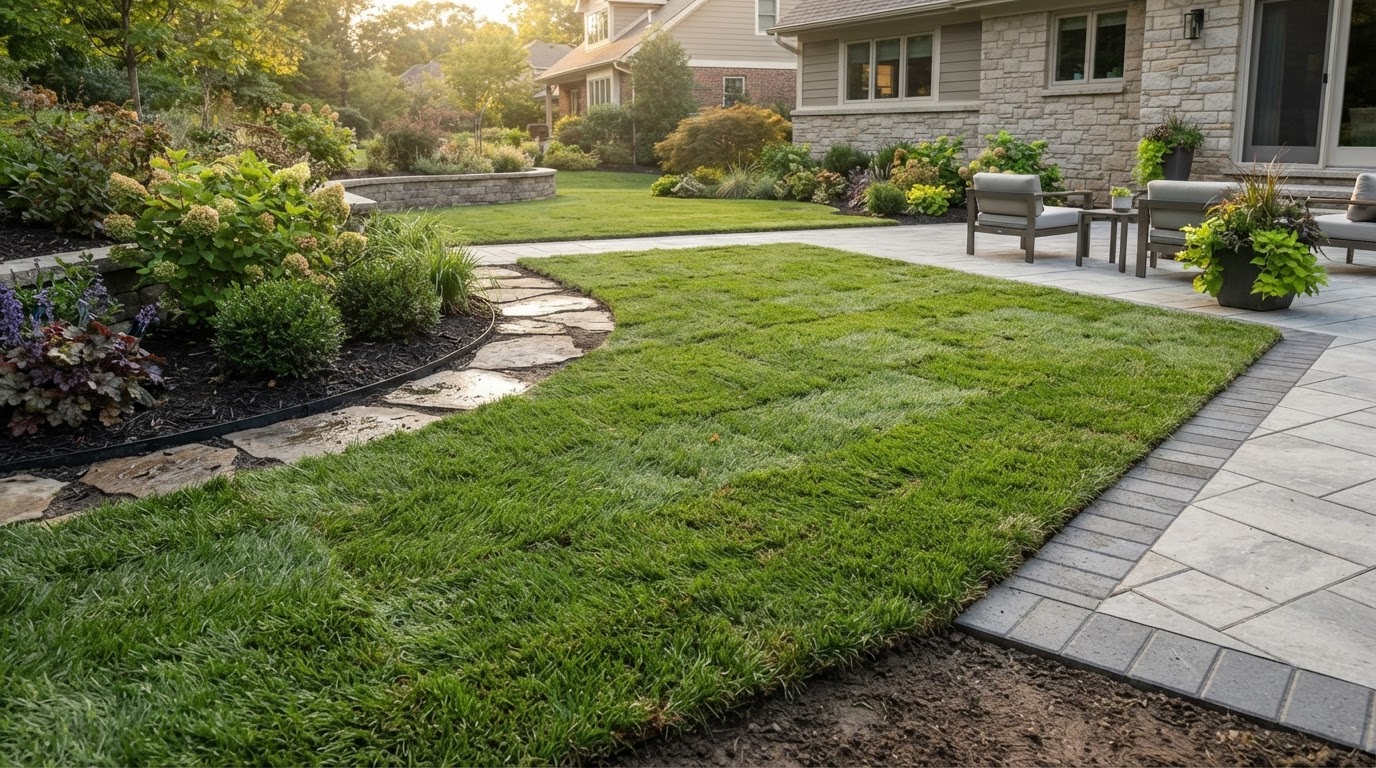
Concept visualization: Sod installation with clean transitions to hardscape and planting beds
Provenance: Concept visualizationScope, Applications, and Homeowner Goals
This service covers the installation of a new sod lawn surface, including the assessment of existing vegetation and surface condition, soil evaluation, grade and drainage, sun exposure, and intended use. It includes turf selection suited to the site, access and installation logistics, water availability for establishment, and transitions to patios, walkways, beds, and drainage features. The preparation needed before the sod goes down is as much a part of the project as the installation itself.
This page is distinct from yard grading and drainage solutions because it focuses on installing the turf surface and the preparation the lawn needs — not on correcting broader drainage or grading problems. If the site has standing water, compaction, or poor grading, those issues may need to be addressed before sod installation makes sense, and those services are mentioned where useful without being duplicated here.
The decisions that define a sod project begin with the reason for the new lawn — establishing a new surface, replacing an unhealthy lawn, or restoring an area after hardscape construction. From there, the existing condition, soil, drainage, sun exposure, and intended use determine what preparation is needed and which turf is suitable.
Preparation before installation
The existing surface, soil, drainage, and grade are assessed and prepared before the sod goes down — because sod installed over poor conditions may look good briefly but struggle to root and establish.
Turf selection for the site
Turf is selected based on sun exposure, intended use, and foot traffic, rather than a universal best variety — because what suits a sunny, actively used lawn may not suit a shaded, low-traffic area.
Grade and drainage evaluation
The grade and drainage are checked because sod does not fix standing water, compaction, or poor grading — it establishes on the surface that is prepared for it.
Transitions to hardscape and beds
Clean edges and transitions to patios, walkways, planting beds, and drainage features are planned so the lawn integrates with the surrounding landscape rather than meeting it abruptly.
Establishment planning
Watering availability and establishment care are part of the project, because sod needs consistent moisture to root and establish — it is not an instant, maintenance-free lawn at installation.
Materials, Methods, and Design Choices
The key decision is whether the site is ready for sod or whether another issue should be resolved first. A site that is ready — reasonable soil, appropriate grade, working drainage, and suitable sun — can receive turf directly with standard preparation. A site with standing water, compacted soil, poor grading, or deep shade may need that issue addressed before sod installation makes sense, because sod alone does not fix those conditions. The comparison below shows how these two situations differ.
Turf selection follows sun exposure and intended use rather than a universal best variety. A sunny, actively used lawn and a shaded, low-traffic area may need different turf. Specific turf recommendations should be verified through regional horticultural sources rather than assumed. Establishment care depends on weather, soil, watering availability, and the season — not a fixed schedule or a guaranteed rooting timeline. The goal is honest preparation and care, not a promise of instant, guaranteed establishment.
| Consideration | Site ready for sod | Site needing preparation first |
|---|---|---|
| Surface condition | Reasonable soil and grade | Compacted, poor soil, or bare patches |
| Drainage | Working drainage, no standing water | Standing water or runoff issues to address |
| Sun exposure | Suitable for the selected turf | Deep shade may limit turf options |
| Watering capacity | Water available for establishment | May need irrigation or access resolved |
| Next step | Prepare and install sod | Address the underlying issue first |
Turf sod selection
Sod selected for the site's sun exposure and intended use — a sunny, actively used lawn and a shaded, low-traffic area may need different turf, verified through regional horticultural guidance rather than a universal recommendation.
Soil preparation
The existing soil is assessed and prepared so the sod has a suitable base to root into — because sod installed over compacted or poor soil may look good briefly but struggle to establish.
Edge transitions
Clean transitions to patios, walkways, planting beds, and drainage features are planned so the lawn meets the surrounding landscape cleanly rather than abruptly, with edges that hold up over time.
Site Assessment and Project Planning
A sod installation assessment looks at the existing surface condition, soil, drainage, grade, and sun exposure — because these conditions determine whether the site is ready for sod or whether an underlying issue should be addressed first. Existing vegetation is evaluated: sod can be installed over a prepared surface, but installing over an unhealthy, compacted, or weed-infested lawn without proper preparation may not succeed. Soil assessment checks whether the ground can support rooting, and grade and drainage are checked because sod does not fix standing water or poor grading.
Sun exposure affects turf selection, because what suits a sunny lawn may not suit a shaded area. Watering availability matters because sod needs consistent moisture to root and establish — the care depends on weather, soil, and the season, not a fixed schedule. Transitions to patios, walkways, beds, and drainage features are planned so the lawn integrates with the surrounding landscape. If the site has drainage or grading problems, those may need to be addressed before sod makes sense.
Existing surface and vegetation
What is the condition of the existing surface and vegetation, and can sod be installed over it with standard preparation, or does the existing lawn need removal or correction first?
Soil assessment
What is the soil type and condition, and can it support rooting? Compacted or poor soil may need amendment before sod can establish successfully.
Grade and drainage
Does the site drain properly, or are there standing water, runoff, or grading issues that should be addressed before sod installation? Sod does not fix those conditions.
Sun exposure and turf selection
What is the sun and shade pattern, and which turf is suited to that exposure and the intended use? A sunny, actively used lawn and a shaded, low-traffic area may need different turf.
Watering availability
Is water available for the establishment period, and what care does the sod need to root and establish? Establishment care depends on weather, soil, and season — not a fixed schedule.
Transitions to hardscape and beds
How does the new lawn meet patios, walkways, planting beds, and drainage features, and are the edge transitions planned for clean, lasting integration with the surrounding landscape?
Germantown Context and Related Services
Properties in Germantown and across Montgomery County, MD vary in soil type, drainage, sun exposure, and the condition of existing lawns. Sod installation is planned around the specific property's conditions — whether the site is ready for turf or whether drainage, grading, or soil issues should be addressed first. Not every yard is suited to the same turf or the same installation approach.
A new lawn often follows hardscape construction or connects with other landscape features. Related completed pages describe the coordinated landscape design it fits within, the tree and shrub planting it may surround, and the paver patios and walkways it transitions to. Yard grading and drainage solutions are future services that may need to be addressed before sod installation makes sense.
Related Completed Services
Sod Installation Questions
Sod installation is a preparation decision as much as a turf choice. Call to talk through your site conditions and whether the ground is ready for a new lawn, or request an estimate to begin planning the installation and establishment.
What preparation may be needed before sod installation?↓
The existing surface, soil, drainage, and grade are assessed and prepared so the sod has a suitable base to root into. This may include removing unhealthy vegetation, amending compacted soil, correcting grade, or addressing drainage issues. Sod installed over poor conditions may look good briefly but struggle to establish.
Can sod be installed over an unhealthy existing lawn?↓
It depends on what is making the existing lawn unhealthy. If the problem is surface-level, preparation may be sufficient. If the issue is compaction, poor drainage, deep shade, or unsuitable soil, those conditions may need to be addressed before sod installation makes sense — because sod alone does not fix those underlying problems.
Should drainage or grading problems be addressed first?↓
Yes, if they are present. Sod does not fix standing water, compaction, or poor grading. If the site has drainage or grading issues, those should be evaluated and may need to be corrected before sod installation, so the new lawn establishes on a surface that can support healthy growth.
How does sun exposure affect turf selection?↓
Turf is selected for the site's sun and shade pattern and the intended use. A sunny, actively used lawn and a shaded, low-traffic area may need different turf. Specific recommendations should be verified through regional horticultural guidance rather than assumed, because what works in one exposure may not thrive in another.
What should homeowners plan for during establishment?↓
Consistent watering during the rooting period, which depends on weather, soil, and season — not a fixed schedule. The sod needs moisture to root into the soil beneath it. Establishment is not instant, and the care the lawn needs in the weeks after installation is part of the project discussion.
Can sod installation be coordinated with new beds or hardscape?↓
Yes. Sod installation is often coordinated with new planting beds, patios, walkways, or drainage features, with clean edge transitions planned so the lawn integrates with the surrounding landscape. Coordinating these together avoids abrupt edges and ensures the lawn meets the hardscape and beds cleanly.
Discuss Your Project
Call our team based in Germantown, MD to talk through scope, site considerations, and next steps — or request an estimate and we will follow up.