
Deer-Resistant Landscape Design Germantown
Deer-resistant landscape design uses plant selection and layout strategies intended to reduce browsing damage on a property. Deer-resistant does not mean deer-proof — no plant is guaranteed to never be browsed, and deer pressure varies between properties and seasons. Germantown Hardscape & Pavers helps property owners in Germantown, MD evaluate planting choices and layout strategies that may reduce browsing vulnerability, with honest expectations about what deer-resistant planting can and cannot accomplish.
The main decision is which plants to select and how to arrange them. Observed browsing patterns, site exposure, and the homeowner's tolerance for some damage all shape the approach. Understanding that deer-resistant is a reduction, not an elimination, sets honest expectations from the start.
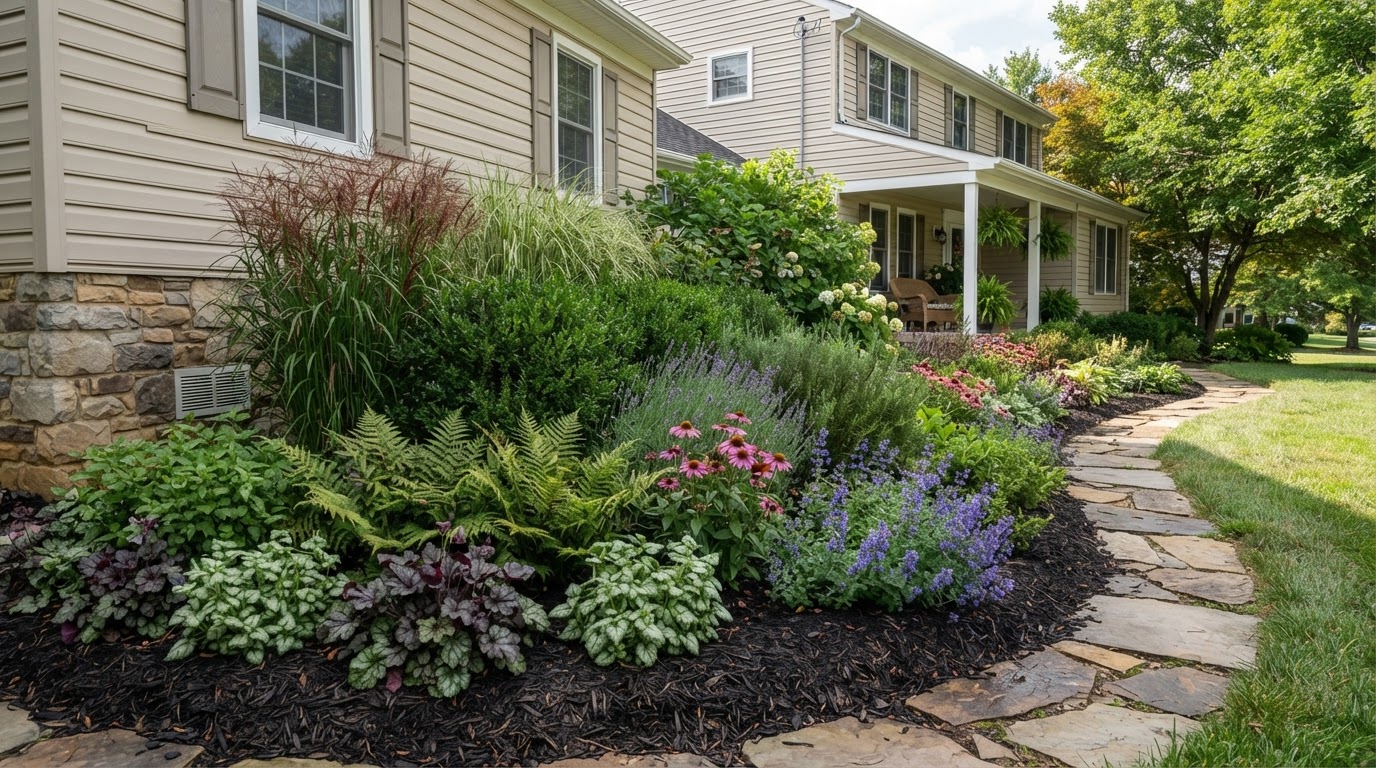
Concept visualization: Deer-resistant landscape design
Provenance: Concept visualizationScope, Applications, and Homeowner Goals
This service addresses landscape planning intended to reduce deer browsing damage through plant selection and layout. It includes evaluating observed browsing patterns, existing plant damage, site exposure and moisture, suitable plant choices, plant diversity, placement of more vulnerable plants, establishment care, other protective measures as separate considerations, and homeowner maintenance expectations.
This page is distinct from the broad tree and shrub planting page, which addresses plant installation generally. Deer-resistant design is a planting strategy guided by browsing pressure, not a separate service category. Privacy hedge and tree installation may consider browsing pressure as one factor among several.
Not every Germantown property experiences the same deer activity. Browsing varies by location, season, and the local deer population. A planting plan that works on one property may not produce the same results on another, and no plant is guaranteed to never be browsed.
Observed patterns
Evaluate where and when browsing has occurred on the property to guide plant selection and placement.
Plant selection
Choose plants with demonstrated deer resistance for the region, with honest expectations about what resistance means.
Vulnerable plant placement
Place more vulnerable plants where browsing pressure is lower or where damage is less visible.
Other measures
Fencing, barriers, or repellents are separate considerations requiring their own evaluation.
Materials, Methods, and Design Choices
The scope of deer-resistant planting can range from replacing selected vulnerable plants to revising a broader planting layout. The comparison below clarifies the difference.
| Consideration | Replace selected vulnerable plants | Revise broader planting layout |
|---|---|---|
| Scope | Targeted replacement of frequently browsed plants | Comprehensive planting plan with browsing pressure in mind |
| Approach | Swap vulnerable species for resistant alternatives | Replan beds, borders, and specimen plants together |
| Disruption | Limited to affected beds | Affects the broader landscape layout |
| Expectation | Reduces vulnerability in key areas | Reduces vulnerability across the property |
Deer resistance is not deer-proof
No plant is guaranteed to never be browsed; resistance means a plant is less likely to be damaged, not immune.
Regional verification
Deer-resistance claims should be verified through suitable regional horticultural sources, not generic national lists.
Browsing varies
Deer pressure varies by location, season, and population; a plan that works in one season may need adjustment in another.
Site Assessment and Project Planning
Before defining the work, several factors shape the approach: observed browsing patterns, existing plant damage, site exposure and moisture, suitable plant choices, the homeowner's tolerance for some damage, and maintenance expectations. Fencing, barriers, or repellents are separate considerations requiring their own evaluation — this service does not include pesticide or repellent application.
Observed browsing
Where and when browsing has occurred guides which plants to replace and where to place vulnerable species.
Site conditions
Sun, shade, and moisture determine which deer-resistant plants will also thrive at the site.
Plant diversity
A diverse planting with resistant species can reduce overall vulnerability, but does not eliminate browsing risk.
Vulnerable plant placement
More vulnerable plants may be placed where browsing pressure is lower or damage is less visible.
Maintenance expectations
The homeowner should understand that deer-resistant plants still need establishment care and monitoring.
Other protective measures
Fencing or repellents are separate considerations; this service does not include chemical repellent application.
Germantown Context and Related Services
Deer activity across Germantown and Montgomery County, MD varies by neighborhood, proximity to wooded areas, and season. Whether deer-resistant planting makes sense for a given property depends on the observed browsing pressure — not on an assumption that every local yard faces the same deer activity.
Related completed pages: tree and shrub planting addresses individual plant installation, and privacy hedge and tree installation may consider browsing pressure as one factor. Garden bed design and installation addresses the beds where deer-resistant plantings are often placed.
Deer-Resistant Landscape Design Questions
Deer-resistant planting is a reduction strategy, not a deer-proof guarantee. Call to talk through your observed browsing patterns and planting goals, or request an estimate to begin evaluating a planting plan that fits your property.
What does deer-resistant planting actually mean?↓
Deer-resistant means a plant is less likely to be browsed than other plants, not that it will never be damaged. No plant is deer-proof. Deer resistance is a reduction in vulnerability, not an elimination of risk. Deer pressure varies by location and season, so resistance is not a guarantee.
Can selected plants be replaced without redesigning the whole yard?↓
Yes, in many cases. Targeted replacement of the most frequently browsed plants with resistant alternatives can reduce vulnerability in key areas without revising the entire landscape layout. The scope depends on the observed browsing pressure and the homeowner's goals.
Why might browsing vary between properties or seasons?↓
Deer pressure varies by location, the local deer population, the availability of other forage, and the season. A plant that is lightly browsed in one year may be heavily browsed in another when food is scarce. Browsing patterns should be observed over time to guide the planting plan.
Can privacy planting also consider browsing pressure?↓
Yes. Privacy hedge and screen plantings can be selected with both screening and deer resistance in mind. A mixed planting with resistant evergreen species may provide screening with reduced browsing vulnerability, though no plant is guaranteed to be ignored by deer.
What observations help guide the planting plan?↓
Notes on which plants have been browsed, where and when the damage occurs, which plants have been ignored, and how the deer pressure changes through the seasons. These observations help guide which plants to replace, which to retain, and where to place vulnerable species.
Discuss Your Project
Call our team based in Germantown, MD to talk through scope, site considerations, and next steps — or request an estimate and we will follow up.