
Patio Drainage Correction Germantown
A patio that pools water after rain is not draining — and the water sitting on the surface is degrading the joints, the bedding, and the base beneath it. Pooling usually has one of three causes: the surface pitch sends water to a low spot, a water trap collects runoff with no outlet, or a downspout or grade directs flow onto the patio. Germantown Hardscape & Pavers corrects patio drainage in Germantown, MD by reading where the water actually goes, then installing channel drains, re-pitching the surface, or relieving the trap at its source.
The main decision is whether the water arrives from above — sheet flow across the surface — or is trapped beneath, and whether the fix is a collection point, a pitch correction, or diverting the source. Adding a drain without reading the cause moves the pooling rather than eliminating it.
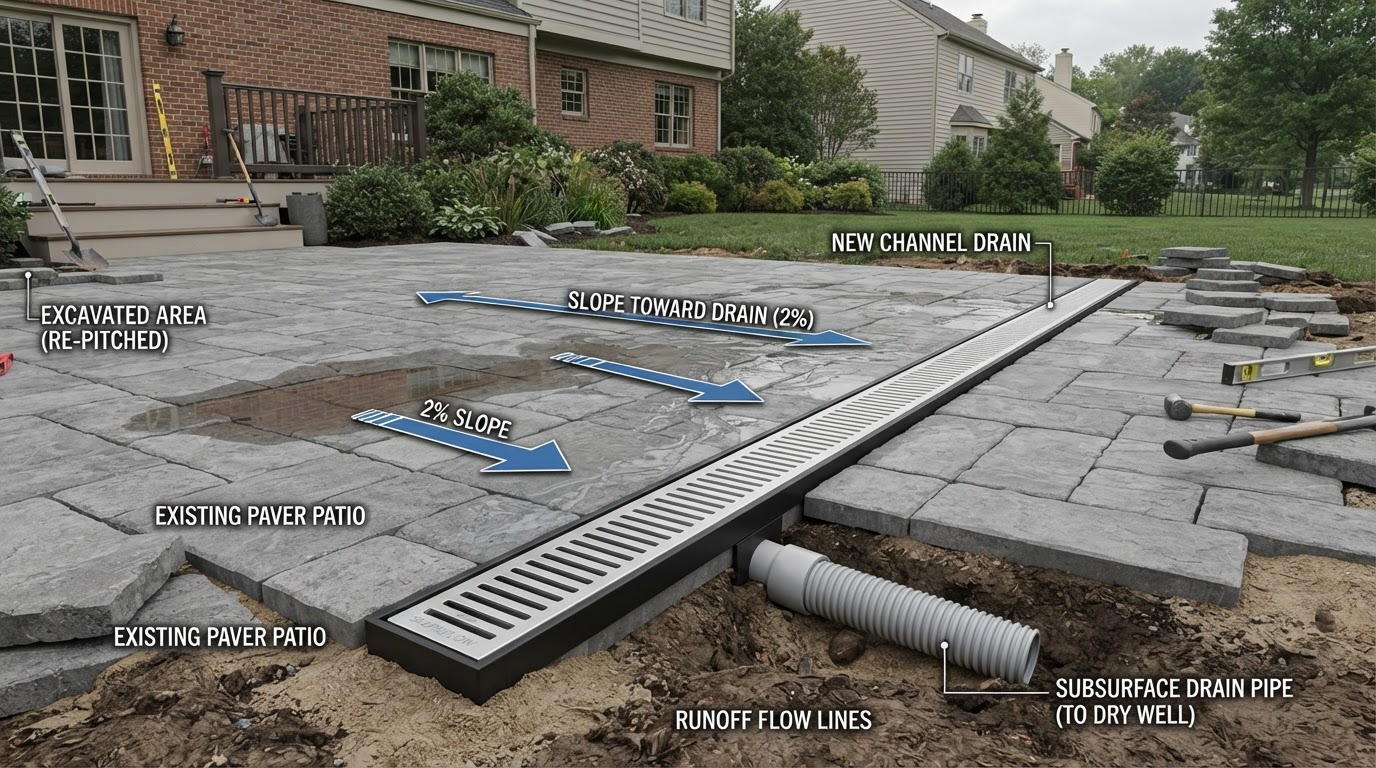
Concept visualization: Patio drainage correction eliminating pooling
Provenance: Concept visualizationScope, Applications, and Homeowner Goals
This service addresses water that collects on or around an existing patio — standing puddles, slow-drying low spots, runoff sheeting across the surface, or discharge from a downspout or grade washing onto the pavers. It includes evaluating where the water comes from and where it should go, then installing collection (channel drains or catch basins), correcting the surface pitch, or diverting the source so the surface sheds and dries.
This page is distinct from yard drainage solutions, which evaluates the broader property water problem and selects an overall approach, and from French drain installation, which collects subsurface water. Patio drainage correction is surface-specific: the patio itself is the subject. Where the patio pooling is fed by a larger property drainage issue, that broader plan precedes the patio-specific fix.
Choosing between a channel drain across the surface, a pitch correction of the pavers, and diverting a downspout depends on where the water comes from and how it crosses the patio. The right fix matches the flow pattern rather than defaulting to a drain in the lowest spot.
Surface pitch correction
A patio pitched toward a low spot is re-graded so water sheds off the surface rather than collecting in the middle of it.
Channel drain installation
A linear drain installed across the flow path intercepts sheet flow before it reaches the pooling area and conveys it to a suitable destination.
Water-trap relief
A low spot or bordered area that collects runoff with no outlet is relieved so water exits rather than sitting on the pavers.
Source diversion
Where a downspout or grade directs flow onto the patio, the source is diverted so the patio stops receiving the water in the first place.
Materials, Methods, and Design Choices
The comparison below distinguishes the patio drainage fixes by where the water comes from — and why a drain alone does not fix a pitch or source problem.
| Water source | Channel drain | Pitch correction | Source diversion |
|---|---|---|---|
| Best fit | Sheet flow across the surface | Surface pitched to a low spot | Downspout or grade onto patio |
| What it does | Collects and conveys runoff | Re-grades to shed | Stops the water arriving |
| When it's not enough | If the pitch still traps water | If a source keeps feeding it | If the surface still pools |
| Surface disruption | Moderate — cuts across pavers | Higher — lifts the surface | Lower — at the source |
| What it cannot do | Does not re-pitch the surface | Does not collect from a source | Does not grade the patio |
Channel and point drains
Linear channel drains intercept sheet flow; catch basins collect at a point. The choice matches how water actually arrives at the pooling area.
Surface re-pitch
Where the pavers themselves direct water to a low spot, the surface is re-laid to a pitch that sheds toward a drain or the lawn edge.
Source diversion
A downspout discharging onto the patio or a grade sloping onto it is diverted — via underground downspout drainage or a swale — so the patio stops receiving the flow.
Site Assessment and Project Planning
Before defining the correction, several factors shape the approach: where the water comes from, where it currently goes, the existing surface pitch, and what a suitable destination is. Installing a drain at the lowest point without reading the cause simply moves the pooling to the drain outlet.
Water source
Whether the water is sheet flow across the surface, a downspout or grade onto the patio, or a trapped low spot determines which fix — drain, pitch, or diversion — applies.
Existing pitch
The current surface slope is evaluated to see whether the pavers send water off the patio or toward the pooling area.
Drainage destination
Collected water needs a suitable destination; a drain that empties into a new low spot or toward the foundation is not a finished plan.
Paver disruption
A channel drain cuts across the existing surface; a pitch correction lifts it. The disruption is weighed against the fix the cause requires.
Joint and base damage
Prolonged pooling degrades the joint sand and the bedding; the extent of existing damage is noted so it is restored alongside the drainage fix.
Property drainage context
Where the patio pooling is fed by a broader property drainage issue, that larger plan is identified so the patio fix is not undone by the upstream cause.
Germantown Context and Related Services
Across Germantown and Montgomery County, MD, patio pooling most often traces to a surface pitched toward a low spot, a downspout or grade washing onto the pavers, or a bordered water trap with no outlet. Each is a different fix, and dropping a drain into the lowest point without reading the cause is the most common reason the pooling simply relocates.
Related completed pages: yard drainage solutions provides the broader property drainage framework, channel drain and catch basin installation covers the collection tools this service uses, and French drain installation addresses subsurface water that complements a surface patio fix.
Patio Drainage Correction Questions
A pooling patio is a pitch, trap, or source problem. Call to describe where the water collects and where it seems to come from, or request an estimate to evaluate whether a drain, a re-pitch, or a source diversion fits your patio.
Why does my patio pool water in the same spot every time?↓
The surface is pitched toward that low spot, a water trap has no outlet, or a downspout or grade is directing flow onto the patio. Each cause has a different fix — a drain, a pitch correction, or diverting the source — and the right one depends on where the water comes from.
Can you just put a drain in the lowest point?↓
A drain at the lowest point collects the water but does not address what sends it there. If the surface is pitched toward the spot or a source keeps feeding it, the pooling simply relocates to the drain outlet. Reading the cause first determines whether a drain, a re-pitch, or a source diversion actually fixes it.
Will fixing the patio drainage require lifting the pavers?↓
It depends on the cause. A channel drain cuts across the existing surface with moderate disruption. A pitch correction lifts the pavers to re-grade. Diverting a downspout or source often does not touch the patio at all. The cause determines the disruption.
What if the water is coming from the yard, not the patio?↓
Then the patio pooling is a symptom of a broader property drainage issue, and that larger plan should precede the patio-specific fix. A patio correction alone is undone if the upstream source keeps feeding it.
Does pooling damage the patio over time?↓
Yes. Standing water degrades the joint sand, erodes the bedding, and works into the base, accelerating settling and joint loss. Correcting the drainage protects the surface as well as eliminating the puddles.
Discuss Your Project
Call our team based in Germantown, MD to talk through scope, site considerations, and next steps — or request an estimate and we will follow up.