
Paver Cleaning & Sealing Germantown
Paver cleaning and sealing are related decisions about maintaining an existing surface, and sealing is not automatically appropriate for every material or installation. Paver cleaning and sealing in Germantown, MD starts with identifying the surface material and its existing finish, then assessing staining, organic buildup, weathering, and any prior coatings before selecting a cleaning method and evaluating whether a sealer makes sense. Germantown Hardscape & Pavers helps property owners care for paver surfaces without making assumptions that could damage the material or compromise drainage.
The main decision is not whether to seal, but whether sealing is appropriate for the specific surface — and if so, which sealer. Some finishes change appearance or traction characteristics, some surfaces should not be sealed at all, and some installations have underlying problems that cleaning and sealing will not fix.
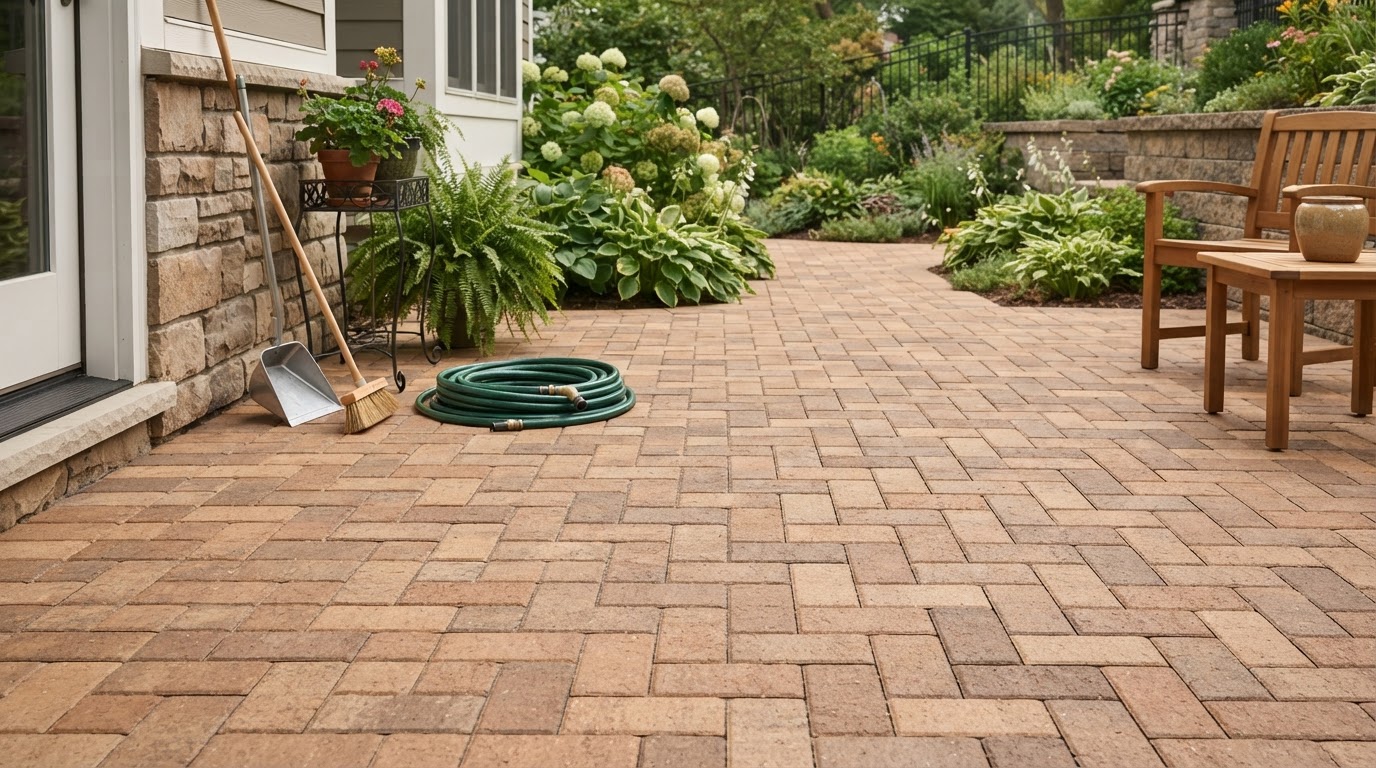
Concept visualization: Maintained paver surface suitable for cleaning and sealer evaluation
Provenance: Concept visualizationScope, Applications, and Homeowner Goals
This service covers the cleaning of existing paver surfaces and the evaluation and application of compatible sealers. It includes identifying the surface material and existing finish, assessing staining, organic buildup, weathering, and prior coatings, selecting cleaning methods compatible with the surface, protecting adjacent planting and finishes, evaluating the joint condition before and after cleaning, and determining whether sealing is appropriate for the specific material and installation.
This page is distinct from repair services. Cleaning and sealing maintain the surface; they do not correct settlement, failed edge restraints, drainage problems, or unstable base conditions. If a paver surface has sunk, shifted, or lost its edge restraint, that is a repair issue addressed through separate specialty services — not something a cleaning and sealing project will resolve.
The information that defines the scope includes the paver material, the existing finish or prior coatings, the type and age of the staining or buildup, the joint material and condition, and the relationship of the surface to adjacent planting, walls, and the building. Each of these changes the cleaning approach and the sealer decision.
Surface identification
The paver material, finish, and any prior sealer or coating are identified first, because cleaning and sealing methods follow the material — not the other way around.
Compatible cleaning methods
Cleaning is selected to match the surface so staining and organic buildup are addressed without etching, discoloring, or damaging the paver or its joints.
Joint condition evaluation
The joint material is checked before and after cleaning, because aggressive cleaning can displace joint sand and compromise the surface's stability.
Sealer appropriateness
Whether sealing is appropriate is evaluated for the specific material and installation, understanding that some finishes change appearance or traction and some surfaces should not be sealed.
Adjacent protection
Planting, walls, siding, and other finishes near the surface are protected during cleaning and sealing so the process does not create new problems.
Materials, Methods, and Design Choices
Cleaning and sealing are decisions that follow from the specific surface. A concrete paver with a prior sealer, a natural stone surface with organic staining, and a permeable paver system each call for different approaches. The useful decision guide is not between sealer brands but between three paths: cleaning alone, cleaning with a compatible sealer, or addressing a repair issue before considering sealing at all.
Some finishes change appearance or traction when sealed, and some sealers are incompatible with certain pavers or joint systems. A sealer that enhances color may also darken the surface or create a wet look that changes the design intent. A sealer applied to a permeable system may reduce its ability to infiltrate water. These are not universal warnings — they are reasons the sealer decision is specific to the surface.
| Decision path | Cleaning alone | Cleaning + compatible sealer | Repair first, then evaluate |
|---|---|---|---|
| When it fits | Light staining, good joints | Sound surface, appropriate material | Settlement, edging, or drainage issues |
| What it addresses | Surface dirt and organic buildup | Staining, protection, appearance | The underlying cause of the surface problem |
| Surface risk | Minimal when compatible | Finish change to evaluate | Sealing over a problem hides it, not fixes it |
| Joint impact | Joints re-checked after cleaning | Joints protected during application | Joints may need re-leveling first |
| Next step | Ongoing routine cleaning | Resealing per product and surface guidance | Repair, then re-evaluate cleaning and sealing |
Surface-appropriate cleaning
Cleaning methods and pressure are matched to the paver material and finish so staining and organic buildup are removed without eroding the surface or displacing joints.
Compatible sealer selection
When sealing is appropriate, the sealer is selected for the specific paver material, understanding that some products change color, sheen, or traction and some surfaces should not be sealed.
Joint and permeability care
Joint material is protected during cleaning and sealing, and for permeable systems, sealer compatibility with infiltration is evaluated rather than assumed.
Site Assessment and Project Planning
Assessing a paver surface for cleaning and sealing means looking at the material, the existing finish, the type and extent of staining, the joint condition, and any underlying issues the surface may be masking. A surface that looks dirty may also be settling, losing its edge restraint, or draining poorly — and sealing over those problems does not correct them.
If a surface was previously sealed, the existing coating is assessed for compatibility with any new sealer, because layering incompatible products can cause clouding, peeling, or surface damage. Manufacturer-specific guidance for the paver and the sealer is part of the evaluation, because product recommendations vary and not every sealer suits every paver or finish.
Material and existing finish
What paver material and finish is installed, and is there a prior sealer or coating that affects how the surface should be cleaned and whether it can be resealed?
Staining and buildup type
What kind of staining or organic buildup is present — leaf tannins, irrigation rust, oil, efflorescence — and what cleaning approach addresses each without damage?
Joint condition
Is the joint material intact and stable, or has it eroded or washed out, and will cleaning displace it further or require re-compaction afterward?
Underlying issues
Is the surface level and stable, or are there signs of settlement, edge movement, or drainage problems that cleaning and sealing will not fix?
Permeability compatibility
If the surface is part of a permeable system, will a sealer reduce its ability to infiltrate water, and is sealing appropriate for that installation?
Adjacent surfaces and planting
What planting, walls, siding, or other features border the surface, and how are they protected during cleaning and sealer application?
Germantown Context and Related Services
Paver surfaces in Germantown and across Montgomery County, MD face seasonal conditions that affect cleaning and sealing — leaf litter and tannin staining in fall, organic buildup in humid summers, and efflorescence after wet winters. The cleaning approach and sealer decision reflect the specific surface and the conditions it experiences, not a universal maintenance schedule.
Cleaning and sealing connect to the surfaces themselves. Related completed pages describe the paver patio, paver walkway, paver driveway, and permeable paver installations this care supports, along with the maintenance distinctions between conventional and permeable systems.
Paver Cleaning & Sealing Questions
Caring for an existing paver surface starts with identifying the material and its condition, not with a product. Call to discuss what your surface needs, or request an estimate to evaluate cleaning and sealing for your patio, walkway, or driveway.
Do all paver surfaces need to be sealed?↓
No. Whether sealing is appropriate depends on the paver material, the finish, the installation type, and the surface's exposure. Some pavers benefit from a compatible sealer that protects against staining; others should not be sealed at all, and permeable systems may lose infiltration capacity if sealed. The decision follows the specific surface rather than a universal rule.
Can cleaning remove every stain?↓
Not always. Many stains — leaf tannins, organic buildup, efflorescence — respond well to compatible cleaning, but some types of staining may be persistent or may have affected the paver below the surface. The goal is the right result for the specific material, not a guarantee that every mark disappears. The cleaning method is matched to what will safely address the staining without damaging the paver.
What should be checked if a surface was previously sealed?↓
The existing sealer is assessed for its type, condition, and compatibility with any new product. Layering an incompatible sealer over an old one can cause clouding, peeling, or surface damage, so the prior coating may need to be removed or a compatible product selected. The joint material is also checked, because older sealed surfaces sometimes have compromised joints.
Does cleaning and sealing fix sunken pavers?↓
No. Cleaning and sealing maintain the surface appearance; they do not correct settlement, failed edge restraints, drainage problems, or unstable base conditions. If pavers have sunk or shifted, that is a repair issue addressed through separate specialty services. Sealing over a settled surface hides the problem rather than fixing it.
Can cleaning affect the joint material?↓
Yes. Aggressive cleaning can displace joint sand or aggregate, especially if the joints are already weakened. The joint condition is evaluated before and after cleaning, and joints may need re-compaction or material replacement afterward. For permeable systems, keeping the joint aggregate clear is essential to infiltration, so cleaning methods are selected with that in mind.
How is a suitable sealer selected?↓
The sealer is selected based on the paver material, the existing finish, the desired appearance — natural, enhanced color, or wet look — and the surface's exposure and use. Manufacturer guidance for both the paver and the sealer is part of the evaluation, because products vary in compatibility, sheen, traction, and reapplication interval. Not every sealer suits every paver, so the selection is specific to the surface.
Discuss Your Project
Call our team based in Germantown, MD to talk through scope, site considerations, and next steps — or request an estimate and we will follow up.