
Shade Garden Design & Installation Germantown
Shade garden design creates planting plans for areas that receive limited direct sunlight — beneath established trees, beside buildings, or in yards shaded by neighboring structures. Not all shade is the same: dry shade beneath a mature tree differs from moist shade beside a foundation, and seasonal shade differs from year-round deep shade. Germantown Hardscape & Pavers helps property owners in Germantown, MD evaluate the actual shade conditions at their property and select plants suited to those conditions.
The main decision is what type of shade the site actually has. A plant labeled shade-tolerant may not suit every shade environment. Understanding the difference between dry shade, moist shade, and seasonal shade early determines which plants will thrive and which will struggle.
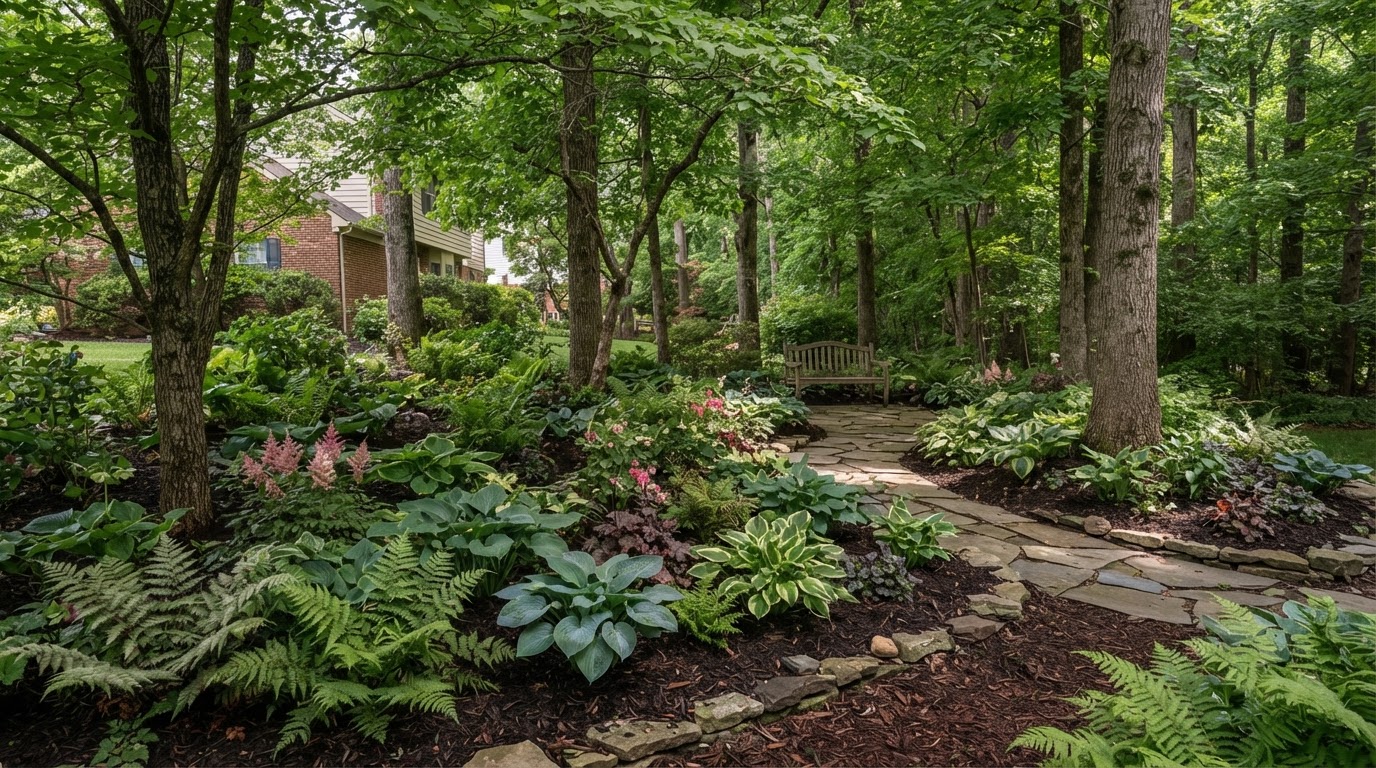
Concept visualization: Shade garden with woodland perennials under mature trees
Provenance: Concept visualizationScope, Applications, and Homeowner Goals
This service addresses planting plans for shaded landscape areas. It includes evaluating light patterns through the day and seasons, existing roots, soil moisture, drainage, mature plant size, texture and seasonal interest, maintenance access, paths and sitting areas, and protecting existing trees during installation. Different shade types — dry shade beneath trees, moist shade beside buildings, seasonal shade, and shade near structures — require different plant selection and site preparation.
This page is distinct from the broad garden bed design and installation page, which addresses planting beds generally. Shade garden design is a specialized approach for the specific conditions of shaded sites. Tree and shrub planting addresses individual plant installation; this page addresses a planting plan for a shaded area as a whole.
Shade-tolerant does not mean suitable for all shade. A plant that thrives in moist shade may fail in dry shade, and a plant suited to dappled light may not survive deep shade. The planting plan must match the actual conditions at the site.
Shade type
Evaluate whether the shade is dry, moist, seasonal, beneath trees, or beside structures — each requires different plants.
Root competition
Assess existing tree roots that compete for water and nutrients in shaded beds.
Soil moisture
Determine whether the shaded area is dry, moist, or periodically wet, and select plants accordingly.
Tree protection
Plan installation to protect existing trees — avoid cutting significant roots or burying trunks.
Materials, Methods, and Design Choices
The type of shade at the site determines the planting plan. The comparison below clarifies why a shaded bed beneath an established tree requires a different approach than a shaded area beside a building.
| Consideration | Shaded bed beneath established trees | Shaded area beside a building |
|---|---|---|
| Root competition | Significant tree roots compete for water and nutrients | Less root competition from nearby planting |
| Moisture | Often dry shade — trees absorb available water | May be moist or dry depending on runoff and drainage |
| Access | Limited — tree roots and low branches | Wider — along a foundation or wall |
| Soil disturbance | Must avoid cutting significant roots | Must avoid disturbing foundation area |
| Plant placement | Selected for dry shade and root tolerance | Selected for the moisture and light beside the structure |
Dry shade plants
Plants for shaded areas beneath trees must tolerate both shade and root competition for moisture.
Moist shade plants
Plants for shaded areas with consistent moisture need different selection than dry-shade species.
Tree protection
Installation beneath established trees must avoid cutting significant roots or adding soil over root zones without assessment.
Site Assessment and Project Planning
Before defining the work, several factors shape the approach: the actual light patterns through the day and seasons, existing roots and their extent, soil moisture and drainage, mature plant size, and the need to protect existing trees during installation. Shade-tolerant does not mean suitable for all shade — the plan must match the actual conditions.
Light patterns
Track sun and shade through the day and across seasons — seasonal shade differs from year-round deep shade.
Root competition
Assess existing tree roots that compete for water and nutrients in the shaded bed.
Soil moisture
Determine whether the area is dry, moist, or periodically wet — dry shade and moist shade need different plants.
Tree protection
Plan installation to avoid cutting significant roots, burying trunks, or adding soil over established root zones without assessment.
Mature plant size
Space plants for mature growth in the available light, not nursery size in ideal conditions.
Maintenance access
Plan for weeding, watering, and monitoring access in the shaded bed.
Germantown Context and Related Services
Properties across Germantown and Montgomery County, MD include mature trees, wooded lots, and shaded areas beside structures — each with different shade conditions. Whether a shade garden suits a given area depends on the actual light, moisture, and root conditions, not on a generic shade-plant list.
Related completed pages: garden bed design and installation addresses planting beds generally, and tree and shrub planting addresses individual plant installation. Natural stone walkway installation may complement a shade garden with a path through a shaded landscape.
Shade Garden Design & Installation Questions
A shade garden must match the actual shade type, not just the fact that an area is shaded. Call to talk through your light and moisture conditions, or request an estimate to begin evaluating a planting plan that fits your shaded area.
Why does the type of shade matter?↓
Dry shade beneath a mature tree, moist shade beside a foundation, seasonal shade, and deep shade are different planting environments. A plant that thrives in moist shade may fail in dry shade. The planting plan must match the actual shade type, not just the fact that the area is shaded.
Can planting be added beneath existing trees?↓
Yes, but installation must protect the tree. Significant roots should not be cut, trunks should not be buried, and large amounts of soil should not be added over established root zones without assessment. Plants must also tolerate the root competition and dry conditions that trees create.
How do dry and moist shade affect plant selection?↓
In dry shade, trees absorb available water, so plants must tolerate both shade and drought. In moist shade, plants have more water available but must tolerate the specific moisture conditions. Different plants suit each — a plant labeled shade-tolerant may not suit both.
Can a shade garden include a path or sitting area?↓
Yes. A shade garden can include a path or a small sitting area, with plants selected around the circulation. The path material should suit the shaded conditions, and the layout should account for tree roots and maintenance access.
What should be checked before changing the soil level?↓
Adding soil over established tree roots can smother them and harm the tree. Before changing the soil level in a shaded area beneath trees, the root zone should be assessed. Raising the grade may require a different approach or professional evaluation to avoid damaging the tree.
Discuss Your Project
Call our team based in Germantown, MD to talk through scope, site considerations, and next steps — or request an estimate and we will follow up.